teamA-GG, Author at Jory Brigham Design INC

Woodworking Classes in Southern California – A Must Try!

Intermediate Furniture Workshops

I get asked this a lot. Someone from Los Angeles or San Diego finds the workshop online, sees that we’re in Paso Robles, and wonders whether it’s worth the two and a half to three hour drive. My answer is always the same: the people who make that drive consistently say it’s one of the best woodworking decisions they’ve made. And not because of the scenery, though the Central Coast certainly doesn’t hurt. It’s because of what happens inside the shop.

If you’ve been searching for woodworking classes  in Southern California that go beyond a hobby session or a maker-space weekend, we’re probably what you’re looking for. We just happen to be a short road trip north.

What Makes Small Woodworking Workshops Better for Real Learning?

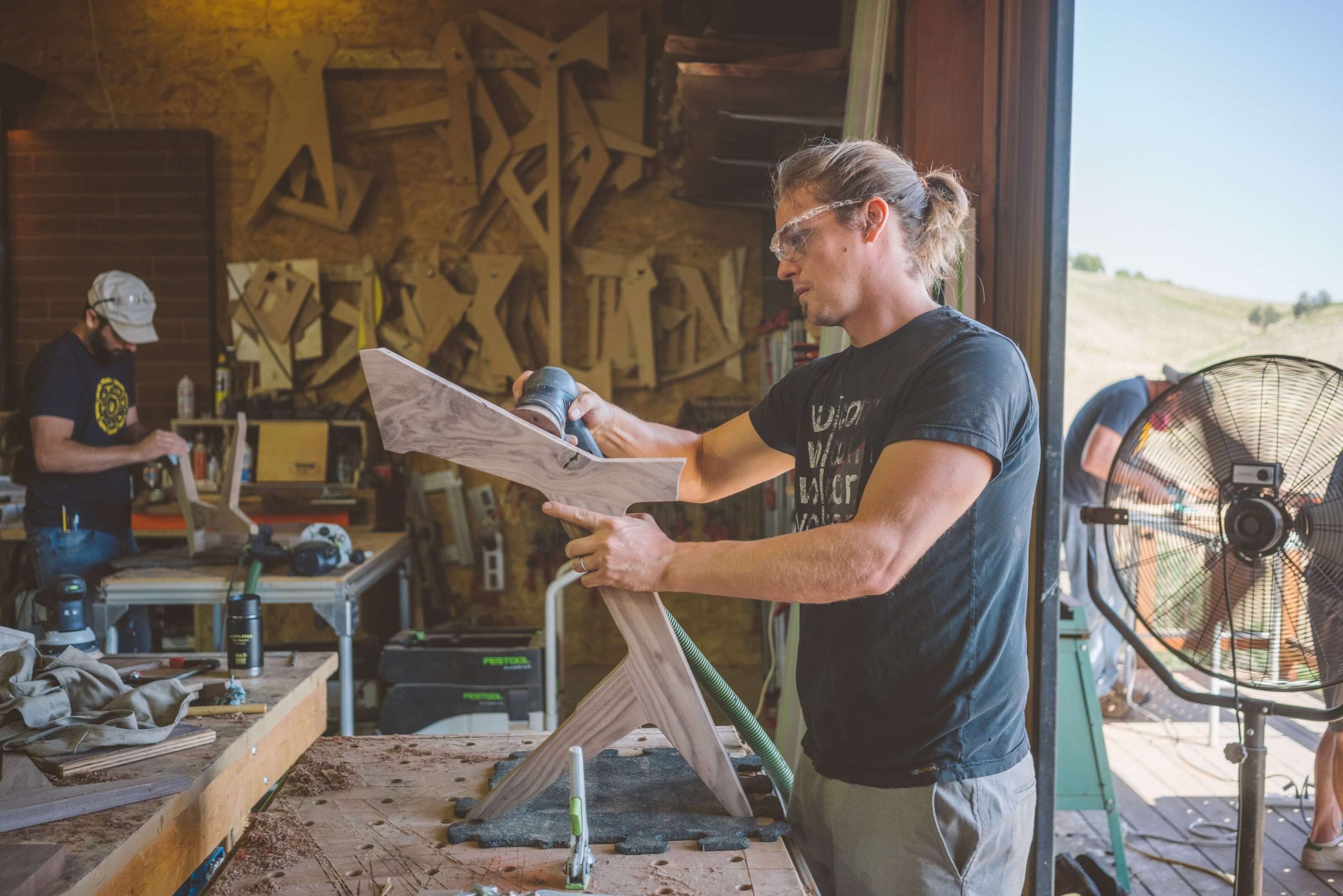
I built this program around small groups because I know how instruction actually works. When you’re one of twenty people in a room with one instructor, you’re not learning woodworking. You’re watching it. The corrections that matter — the ones that change how you approach a joint or a glue-up or a surface — only happen when someone is close enough to see what you’re doing.

Small woodworking workshops like ours cap at eight participants per session, with three instructors present including me. That means roughly one instructor for every two to three participants. In practice, that ratio creates space for the kind of feedback that sticks. We can catch a technique issue before it becomes a habit. We can answer questions in the context of the actual work, not in general terms.

That’s not something a larger program can replicate, regardless of how good the curriculum is. Size is the variable that makes personalized instruction possible, and we take it seriously. See how our courses are structured at the What You’ll Learn page.

Who Is the Jory Brigham Workshop Actually Built For?

Honestly, primarily intermediate woodworkers. People who have built something — a table, a shelf, a box with real joinery — and want to know what comes next. Most participants arrive with a working knowledge of basic tools and an honest curiosity about the techniques they haven’t tried yet.

We do offer a couple of courses, the stool and end table, that are accessible to people with less experience. But the Hank Chair, the Cousin Eddie Bench, the Emerson sofa, and the Hollister credenza all require real prior knowledge. These aren’t beginner-friendly entry points. They’re designed to challenge someone who already knows their way around a shop.

If you’re not sure which course fits your level, reach out through the contact page and we’ll help you figure it out before you book.

What Will You Build and What Skills Will You Leave With?

Every course is built around one specific piece of furniture. That’s the model I believe in: pick one project, go deep on everything it requires, and finish it completely before you leave. Here’s what different courses typically involve:

  • The black walnut stool and end table: foundational joinery, finishing, and project management for newer participants
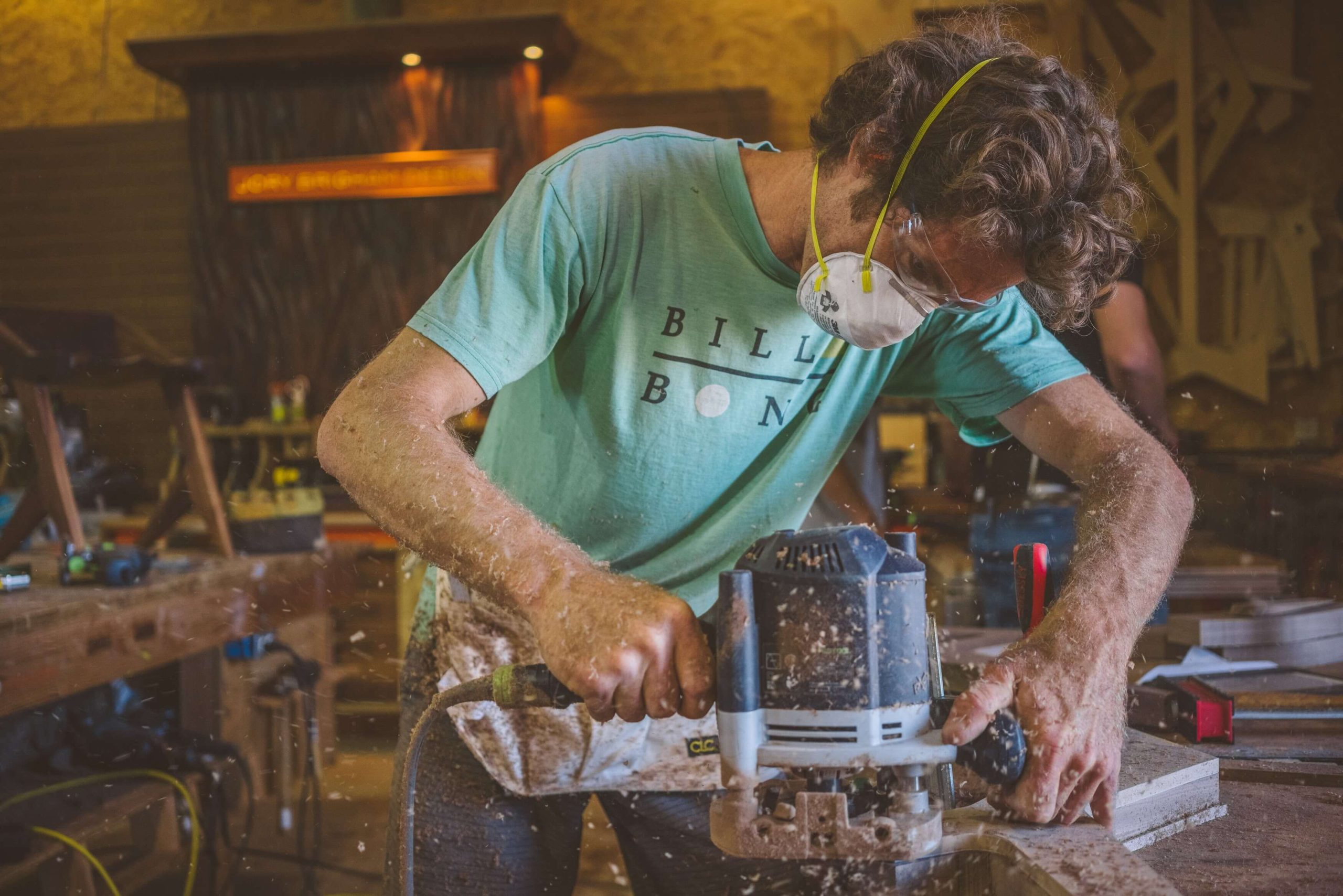
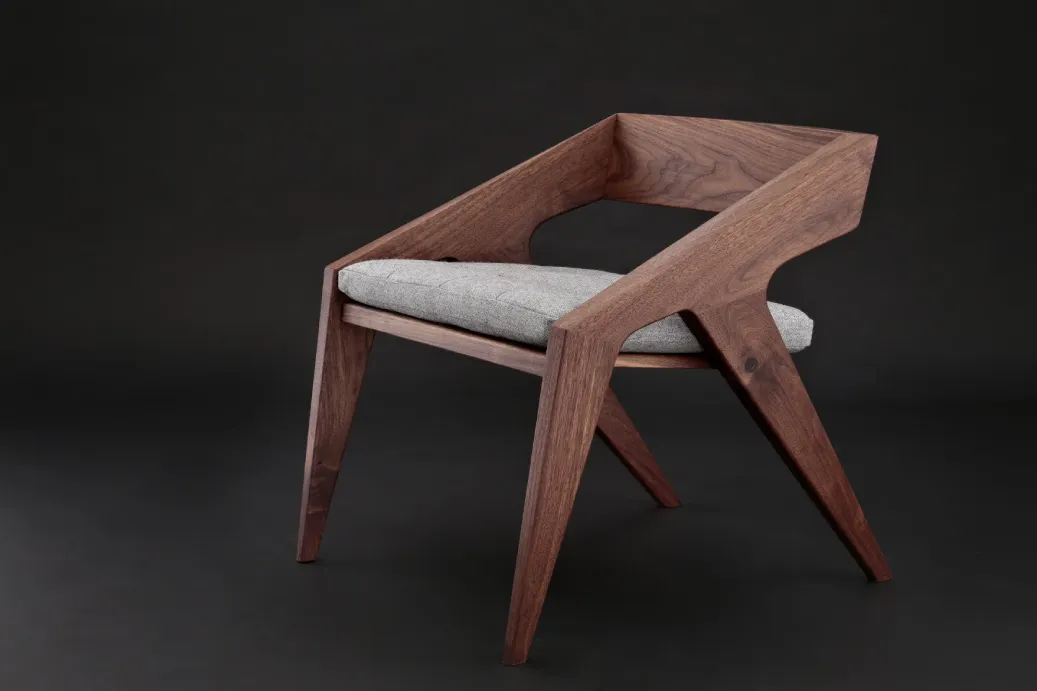
  • The Hank Chair: template routing, Festool Domino joinery, Kutzall carving of the backrest, upholstery selection
  • The Cousin Eddie Bench: joinery, upholstery, surface work
  • The Emerson sofa: a multi-day build covering upholstered seating construction in detail
  • The Hollister credenza: a four-day intensive (Thursday through Sunday) that’s the most comprehensive build in the catalog

All other courses run Friday through Sunday. Every course price includes instruction, all materials, and most meals. Full pricing and dates are available on the course details page.

What Does a Weekend Here Actually Look Like?

Friday: the shop opens at 8am with coffee and pastries. Instruction runs 8:30am to 5:30pm. In the evening, we have a barbecue on the property. It’s become a tradition — a chance to relax, talk about the work, and meet everyone properly before Saturday ramps things up.

Saturday is a full instruction day, same hours, with dinner provided. Sunday wraps up around 2pm when the build is complete. By that point, most participants have something in their hands they built themselves, finished themselves, and are proud of.

If you’re shipping your piece home rather than loading it in the car, we build the crate ourselves and coordinate the freight. The crate is $150 and shipping runs $125 to $250 depending on size and destination.

Why Is Paso Robles Worth the Drive From Southern California?

Paso Robles is in San Luis Obispo County, roughly 200 miles north of Los Angeles. The drive is straightforward — Highway 101 most of the way. Most participants from Southern California leave Friday morning and arrive with time to spare before instruction starts.

The setting is a genuine bonus. We’re in the hills above wine country, with vineyard views and enough quiet to focus on what you came to do. On-property lodging fills fast, but nearby Airbnbs start around $100 a night and there are several hotels within easy distance. Past participants have said the environment — the shop, the dinners, the conversations — makes the weekend feel like something between a class and a retreat.

For woodworking classes Southern California searchers who want real instruction on real furniture, the drive is a reasonable trade. Learn more about us at the homepage and check the blog for more from the workshop.

Ready to Book Your Spot at Jory Brigham Design Workshop?

If any of this sounds like what you’ve been looking for, check the current schedule and register before your preferred date fills. Several 2026 sessions are already at capacity.

FAQs

  1. Are your woodworking classes accessible from Southern California?
    Yes. Paso Robles is roughly 2.5 to 3 hours north of Los Angeles by car, making it a practical destination for a long weekend.
  1. How small are your workshop classes?
    Most courses cap at eight participants with three instructors. The Hollister and Emerson sessions are limited to six participants.
  1. Do I need to bring my own tools or materials?
    No. All tools and materials are provided and included in the course fee. Come ready to work.
  1. Which courses are best for intermediate woodworkers?
    The Hank Chair, Cousin Eddie Bench, Emerson sofa, and Hollister credenza are all designed for intermediate to advanced participants.
  1. Can I ship my finished piece if I’m driving from Southern California and can’t fit it in the car?
    Yes. We build the crate in-house ($150) and coordinate UPS shipping. Freight is typically $125 to $250 depending on the piece.
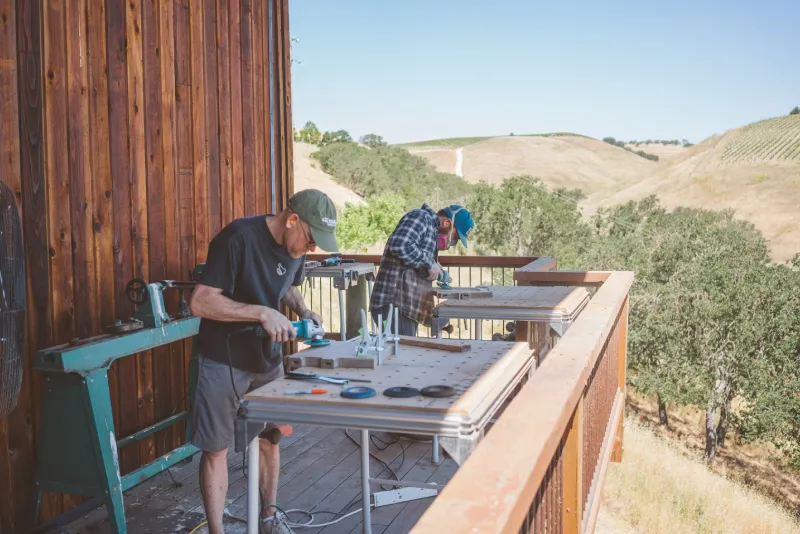
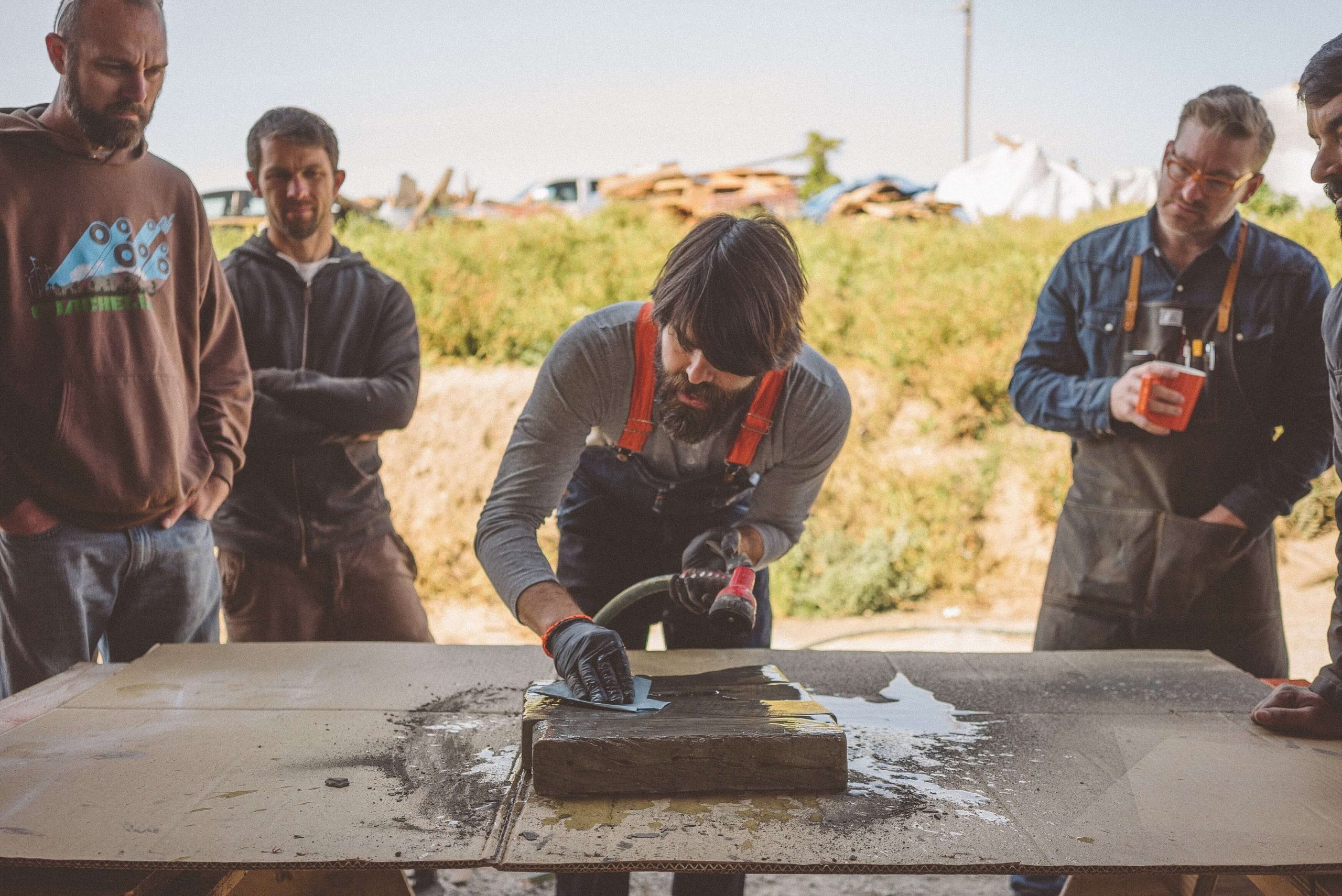
Are Modern Woodworking Classes Actually Teaching You to Build, or Watch?

box img2

The woodworking content landscape has never been bigger. YouTube channels with millions of subscribers, detailed Instagram builds, step-by-step podcast tutorials — if you want to watch someone make furniture, the options are endless. But watching and doing are two fundamentally different things. Modern woodworking classes that are worth your time have one thing in common: they get you building, not just observing. If you’re based in or around Palo Alto or anywhere in California’s Bay Area and you’ve been watching instead of making, it might be time to change that.

What Separates Modern Woodworking Education From the Traditional Approach?

Traditional woodworking apprenticeships are rare. The model of spending years under a master craftsman before touching a real project has largely given way to a faster, more accessible form of education. Modern woodworking classes reflect this shift — they compress meaningful skill development into shorter, more intensive formats, often organized around specific builds rather than general skill sequences.

This isn’t a compromise. It’s a more honest approach to how adults actually learn. According to research published by the Association for Experiential Education, project-based and immersive formats consistently outperform lecture-based instruction for complex manual skills. When you have a specific outcome — a chair, a bench, a sofa — every technique you learn is immediately contextualized. You’re not learning clamping in the abstract; you’re learning how to clamp this joint on this piece before it goes into a finished build.

The tools have also changed. The Festool Domino, laser-cut templates, precision powder-coating rigs — these are tools that didn’t exist in the traditional apprenticeship model. A good modern class teaches you to use them confidently.

Is Woodworking in Palo Alto and the Bay Area Actually Accessible?

The Bay Area has a passionate craft and maker community — Wikipedia’s overview of Palo Alto notes its longstanding culture of innovation and hands-on problem-solving, which aligns naturally with serious craft education. There are maker spaces and community workshops scattered across the region, but structured, instructor-led furniture building at an intermediate or advanced level is harder to find locally.

The most practical option for Bay Area woodworkers looking for serious instruction is typically a short drive or weekend trip south. Jory Brigham Design Workshop in Paso Robles is roughly three hours from Palo Alto — manageable for a Friday-to-Sunday commitment. Multiple participants from the Bay Area, including Tarjei Vassbotn from Palo Alto, have attended and noted the experience as one of the best decisions in their woodworking journey

Woodworking in Palo Alto itself is most often a solo or maker-space activity. The workshop model — where you travel to a dedicated space, work with professional-grade equipment, and receive direct instruction — fills a gap that local resources don’t typically cover at this level of depth.

What Kind of Projects Do Serious Modern Classes Cover?

At Jory Brigham Design Workshop, the project list is specific and deliberate. A black walnut stool or end table for those building foundational confidence. A TIG welding bench that brings in metalworking alongside wood. The Hank Chair, which requires intermediate skill and covers router templates, Festool Domino joinery, and Kutzall carving of the backrest. The Cousin Eddie Bench with upholstery selection. The Emerson sofa. The Hollister credenza — a four-day project that’s one of the most comprehensive builds in any short-format program in California.

Each project is a finished piece of furniture. Not a practice joint, not a sample panel. A piece designed by Jory that you build, finish, and take home. The complete course curriculum is outlined here.

How Does Design Thinking Factor Into Contemporary Furniture Building?

One of the things that sets genuinely modern woodworking instruction apart is the emphasis on design intent — understanding not just how to build a piece, but why it looks the way it does. Jory Brigham’s background as a designer, not just a builder, shapes how the instruction is framed.

The idea isn’t to produce participants who can replicate Jory’s pieces. The goal, as stated explicitly in the workshop philosophy, is to send you home with your own ideas and the confidence to execute them. Template creation is part of that — understanding how to translate a design concept into a buildable template teaches you to think through furniture from a design standpoint, not just a construction one.

This design-forward orientation is consistent with where modern woodworking as a discipline is heading. According to the American Institute of Architects, the integration of design thinking with craft production is increasingly valued in both commercial and residential furniture contexts.

Jory Brigham Design Workshop operates at the intersection of serious instruction and a genuinely enjoyable experience. The workshop is based in Paso Robles — a setting that includes vineyard views, good food, and a community of people who share your interest. Courses run Friday through Sunday (the Hollister course runs Thursday through Sunday), with lodging available on-site and nearby.

Class sizes stay small: maximum eight participants for most courses, six for the Hollister and Emerson. Three instructors are present throughout. That ratio ensures you’re getting real feedback on what you’re actually doing, not just watching from a distance.

If you’ve been looking for modern woodworking classes that don’t talk down to you and actually trust you to build something challenging, take a look at the full course list and get in touch before the next date fills up.

FAQs

  1. What does a modern woodworking class include that traditional instruction doesn’t?
    Modern classes use current professional tools like the Festool Domino, precision templates, and contemporary finishing systems. They’re also structured around completed builds rather than extended apprenticeship sequences, making skill development faster and more practical for working adults.
  1. How far is Jory Brigham Design Workshop from Palo Alto?
    Roughly three hours by car, south along Highway 101 to Paso Robles. Most participants from the Bay Area make it a long weekend trip, combining the workshop with lodging in the area.
  2. Do I need to bring my own tools or materials?
    No. All tools, materials, and most meals are included in the course price. You arrive ready to work and leave with a finished piece.
  1. Are the classes suitable for someone who’s never built furniture before?
    A couple of the courses, like the stool and end table, are accessible for those with limited experience. Most of the catalog, however, is aimed at intermediate woodworkers who are looking to advance existing skills rather than start from scratch.
  1. How do I know which course is right for my skill level?
    The course details page notes skill requirements for each build. You can also reach the team directly via the contact page for a more specific recommendation.

What Does a Real Woodworkers Workshop in California Actually Look Like?

gallery img5 scaled

Most people who’ve been woodworking for a while have a pretty clear sense of what they don’t want in a class. They don’t want to sit through a lecture. They don’t want to share tools with 20 other people. They don’t want a certificate at the end of a weekend that doesn’t reflect anything they actually learned. What they want is simple: a real workshop, real instruction, and something tangible to take home. That’s exactly what a properly structured woodworkers workshop in California delivers — and the difference between that and a hobbyist event is significant.

What Makes a Woodworkers Workshop Worth Attending?

A good workshop doesn’t just transfer knowledge — it changes how you approach your own builds going forward. The benchmark isn’t whether you had a good time (though that matters). It’s whether you left with something you couldn’t do before. Practically speaking, that means the instruction needs to be specific, the builds need to be real, and the environment needs to be small enough for genuine feedback.

According to the Wood Products Council, interest in hands-on woodworking education has increased considerably over the past several years, driven by a broader cultural shift toward making and craft. That demand has created a wide range of programs, but quality varies substantially. The workshops that consistently produce real skill development tend to share a few traits: low student-to-instructor ratios, project-based curriculum, and instructors who are active practitioners rather than full-time teachers.

Who Is the Typical Participant, and Are You the Right Fit?

This is worth being honest about. Most serious woodworking workshops aren’t designed for complete beginners. They’re designed for people who already have some experience and want to push it further. The typical participant at Jory Brigham Design Workshop has been woodworking for at least a year or two, understands how to safely operate basic power tools, and has some familiarity with joinery concepts. They’re not experts, but they’re not starting from zero either.

A few courses at Jory Brigham — the stool and end table, for instance — are more accessible to people with minimal experience. But the majority of the curriculum, including the Hank Chair and the Cousin Eddie Bench, explicitly requires intermediate-level skill. If you’re at that stage — curious, experienced enough to know what you don’t know, and looking for structured advancement — this is well suited to where you are.

What Are You Actually Building, and How Hard Is It?

The course catalog at Jory Brigham Design Workshop is worth reviewing in detail. The builds range from a black walnut stool and end table (a solid starting point) to the Hollister credenza, which is a four-day course and one of the more ambitious weekend builds available anywhere in California.

The Emerson sofa is another notable one — a multi-day build that covers upholstered seating construction at a level of detail most woodworkers never encounter. These are furniture pieces in the truest sense: designed, built, finished, and shipped home. They’re not samples or practice joints. They’re the real thing.

What Tools and Techniques Will You Walk Away With?

A wood workers workshop worth attending teaches technique in a way that transfers. The Festool Domino, for example, is a joinery tool that a lot of intermediate woodworkers have heard of but never used. The sessions at Jory Brigham give participants hands-on time with it in the context of a real build — not a demonstration, but actual use under guidance. Learn more about what’s covered in each course here.

Template and router work is another skill that comes up across multiple courses. Templates are one of those techniques that feel like a small thing until you use them — at which point they change how you design everything. Clamping and glue-up sequencing, finishing, and in the TIG welding bench course, metalworking with an expert Cleveland welder are all part of the curriculum depending on which session you choose.

The workshop also uses tools from brand partners including Festool, SawStop, Bessey, and Woodcraft — all equipment you’d want to know how to use in a serious shop setting.

Where Does Jory Brigham Design Workshop Fit Into All of This?

Jory Brigham isn’t a full-time teacher who also makes furniture on the side. He’s a designer and builder — his work is owned by clients from New York to New Zealand — who also teaches because he believes in how it opens doors for other craftspeople. That distinction matters. The instruction comes from someone actively engaged in the same work, not removed from it.

The workshop islocated in Paso Robles, California, in the hills overlooking the Central Coast. It’s a setting that works on multiple levels: the physical environment is beautiful, lodging is available on the property and nearby, and the Friday barbecue has become part of the tradition. Classes are capped at eight participants (six for some courses) with three instructors, making it one of the better-staffed small workshops in the state.

If you’re thinking about booking, check the course scheduleand contact the teamearly — several dates sell out well before the session runs.

Frequently Asked Questions

  1. Who is the Jory Brigham woodworkers workshop designed for?
    Primarily intermediate woodworkers who have some hands-on experience and want to build their skills further. A few courses are accessible to beginners, but most require prior knowledge of basic tools and joinery.
  1. What is included in the workshop price?
    All instruction, materials, and most meals across the weekend. Lodging is separate, though the workshop can help connect you with nearby options, including on-property accommodation when available.
  1. How small are the classes?
    Most courses are capped at eight participants with three instructors, including Jory Brigham. The Hollister and Emerson courses run with a maximum of six participants.
  1. Can my finished piece be shipped to me?
    Yes. The workshop builds a crate and coordinates UPS shipping after the course. The crate costs $150, and shipping is calculated based on size and destination.
  1. Do the courses run every weekend?
    No. Sessions are scheduled on specific dates throughout the year — typically spring through fall. Check the course details page for current availability.

Where Can I Find the Best Wood Finishing Classes in California Today?

Custom Furniture Workshops in California

The final look of a piece of furniture depends entirely on the quality of the finish. You can have the best joinery in the world, but a poor finish will hide the beauty of the timber. This is why wood finishing classes in California are becoming a staple for intermediate woodworkers. We believe that the finish should celebrate the wood rather than cover it up. Our approach is about highlighting the natural character of the grain. It is about creating a surface that invites a human touch and stands the test of time.

Why is grain narrative more important than wood stain?

Many beginners use heavy stains to change the color of the wood. We move away from this approach. We focus on the grain narrative. This means selecting pieces of wood that tell a story when they are joined together. A good finish should be invisible in its feel but deep in its luster. We use hand rubbed oils that soak into the fibers. This technique ensures that the wood stays the star of the show. We no longer teach concrete or mixed media skills because we want to focus purely on the mastery of the timber itself.

What professional finishes do we use in our shop?

Our finishing process is a mixture of modern efficiency and traditional patience. We avoid thick plastic coatings that feel like a barrier between the user and the wood. Instead, we focus on:

  • Deep penetrating oils that harden within the wood fibers.
  • Hand sanding techniques that move through specific grit progressions.
  • Buffing methods that create a soft and silky tactile experience.
  • Protecting the wood against moisture while allowing it to breathe.
  • Repairable finishes that can be easily maintained for generations.

How do industrial tools impact your final result?

You cannot get a professional finish on a poorly prepared surface. This is why woodworking classes in Southern California are so helpful. You get access to industrial wide belt sanders and high end planers that prepare the wood perfectly. When you start with a surface that is truly flat and smooth, the finish applies much more evenly. Our students spend a significant amount of time on surface preparation. We utilize professional grade gear to take the guesswork out of the process. This ensures that the final result looks like it belongs in a high end gallery.

Why is Southern California the perfect place for makers?

The region has a long history of design and craftsmanship. Southern California is home to some of the most innovative furniture designers in the country. While you are here for a workshop, you can explore the Santa Barbara area or enjoy the coast. The local climate is also ideal for woodworking as the low humidity helps the wood stay stable during the building process. It is an inspiring environment that encourages creativity and artistic risk taking.

What is the true lineage behind the Jory Brigham shop?

Jory Brigham did not learn his trade from a video or a textbook. He is a third generation maker who grew up with sawdust in his hair. This family lineage is the secret to our success. We offer a perspective on design that is rooted in decades of hands on experience. We want to pass this knowledge on to the next generation of intermediate makers. Our workshops are designed to be conversational and factual. We want you to feel like part of the family while you are here at the bench.

Most of our courses are held from Friday morning through Sunday afternoon. This allows for a full weekend of work and community. The only exception to this schedule is the Hollister course which follows its own timeframe. You can see all the details on our about us page.

Take A Fresh Start to Your Hobby

The way you finish a piece of furniture says everything about your respect for the material. At Jory Brigham Design Workshop, we help you master the techniques that turn a good project into a great one. We trade the utility of the garage for the artistry of the studio. Whether you are coming for the skills or the California coast, you will leave with a new sense of pride in your work. Let us finish something beautiful together.

Frequently Asked Questions

  1. Do I need prior experience with finishes?
    A basic understanding of wood is helpful. Our classes are geared toward intermediate makers who want to move away from hardware store sprays and into professional oil finishes.
  1. Will I be using power sanders?
    Yes. We use a variety of professional power tools as well as hand sanding techniques to achieve the perfect surface.
  1. Are these classes for cabinetry makers?
    While the skills are transferable, we focus on fine furniture. Our finishes are designed for sculptural pieces like tables and chairs rather than kitchen cabinets.
  1. Where can I find more about your history?
    Please visit our about us page to learn more about the Brigham family lineage.
  1. How do I contact the shop?
    You can reach us through the contact page or find more info on the home page.

Furniture Making Classes: How to Master Building Classes in CA?

gallery img4 scaled

Many woodworkers spend weeks on joinery only to rush the final stage. The finish is not just a protective layer. It is the handshake of the piece. It is the first thing someone feels when they run their hand across a tabletop. Finding high quality wood finishing classes in California is about more than learning to apply oil. It is about understanding the chemistry of the timber and the psychology of touch. For the intermediate maker, mastering the surface is the final step in moving away from DIY projects and into the world of professional artistry.

Why does the tactile experience define high end furniture?

When you look at a piece of furniture in a gallery, you are drawn to touch it. This is not an accident. It is the result of a deliberate finishing process. In our shop, we believe that the wood should still feel like wood. We have moved away from teaching concrete skills to focus on the organic warmth of timber. We teach you how to create a surface that feels silky rather than plastic. This tactile quality is what separates a sculptural piece from a mass produced item. It is about honoring the life of the tree through a sensitive final touch.

Is there a hidden science behind grain pop and luster?

Every species of wood reacts differently to light. Black Walnut has a deep chocolate swirl that requires a specific sanding progression to truly shine. White Oak has a cellular structure that can look dull if not treated with the right oils. We show you how to read the wood fibers to ensure the grain narrative is clear. This involves understanding how light refracts off the surface. By the time you finish our session, you will know how to make the wood pop without using artificial dyes or heavy pigments that mask the natural beauty.

How do you choose between film finishes and natural oils?

There is a time and place for every finish, but we prefer the honesty of natural oils. Many woodworking classes in Southern California focus on spray booths and lacquer. We take a different path. We focus on hand applied oils that become part of the wood. This creates a finish that is easy to maintain and ages gracefully. It allows the user to stay connected to the material. We discuss the durability of these finishes and why they are the preferred choice for legacy furniture that is meant to be used every day.

Why is Southern California the perfect place for makers?

The light in this region is world famous for a reason. It is the perfect place to judge the clarity of a finish. When you are not at the bench, you can gain inspiration from the Getty Center or the coastal architecture. The local design scene is a blend of mid-century modern and contemporary craft. This environment pushes you to think bigger. The low humidity here also ensures that your oil finishes cure properly and evenly, which is a major advantage for any maker looking for a perfect result.

How do professional tools eliminate finishing frustrations?

Most finishing failures happen during the sanding phase. We provide access to industrial wide belt sanders and specialized dust extraction systems. These tools ensure that your surface is perfectly flat and free of swirl marks before the first drop of oil touches the wood. Utilizing high end gear takes the physical exhaustion out of the process, allowing you to focus on the artistic details. Our shop is a space where the intermediate builder can experiment with gear that is usually only found in professional production houses.

Most of our workshops run from Friday morning to Sunday afternoon. This immersion allows you to see the oil dry and apply secondary coats under expert supervision. Please remember that this schedule is the standard for all sessions except for the Hollister course. You can read more about our history on our about us page.

The Final Handshake

A finished piece of furniture is a conversation between the maker and the user. At Jory Brigham Design Workshop, we help you make sure that conversation is a positive one. We trade the sterile feel of factory finishes for the warmth of hand rubbed artistry.

Whether you are here for the technical mastery or the California sun, you will leave with a new appreciation for the art of the surface. Your masterpiece deserves a finish that is as thoughtful as its construction.

Frequently Asked Questions

  1. Will I learn about spray finishes?
    No. We focus on hand applied oils and waxes. We believe these provide a more intimate and repairable surface for fine furniture.
  1. Is sanding really that important?
    Sanding is 90 percent of a good finish. We show you the professional progression to get a mirror smooth surface without the fatigue.
  1. Can I bring my own project to finish?
    Our workshops are project based. You will be finishing the piece you build during the session to ensure you learn the entire process from start to finish.
  1. Why don’t you use concrete anymore?
    We have shifted our focus to the purity of wood. We believe that mastering timber offers a more timeless result for our intermediate students.
  1. Where can I sign up?
    Check our course details page for the latest availability and location info.

Shaping for the Next Era: A Guide to Modern Furniture Design Workshop!

Let’s be honest: building a simple rectangular box is one thing, but creating a piece of furniture that has real character and style is quite another. If you’re a woodworker who’s mastered the basics, you’ve likely hit the wall where generic plans fall short. You want to make something that looks like it belongs in a high-end gallery, defined by flowing curves, unique textures, and intentional design.

At Jory Brigham Design Workshop, we focus entirely on that leap. We believe that to make modern furniture, you need access to modern techniques and a master’s eye for design. We structured our hands-on curriculum to impart the specific skills required to translate a beautiful idea into a flawless physical object.

What “Modern” Means in Furniture Making

In our shop, “modern” isn’t just an aesthetic; it’s a commitment to efficiency and quality. It means using techniques that allow for fluid, non-linear design while maintaining structural integrity. This is where many traditional furniture making classes fall short, as they often stick to blocky, conventional construction.

We offer a fresh perspective that benefits our target audience—the intermediate woodworker—by focusing on why and how a design choice is made. We teach that signature look through methods like template and handheld router work , which is essential for creating the consistent, flowing lines that characterize contemporary, mid-century modern-inspired pieces. You are learning a system that simplifies complexity.

The Essential Skills for Signature Design and build

A truly signature piece requires more than just good joints; it requires specialized skills to achieve complex shapes and flawless surfaces. You will learn the specific techniques we use every day in our professional shop:

  • Template and Handheld Router Work: This is our secret weapon for consistency. You learn how to use guides to create perfect, repeatable curves and shapes, which is critical for making chair parts or curved table aprons.

  • Precision Joinery: We rely on the Festool Domino system to achieve tight, strong joints quickly, letting you spend more time on the design and finish.

  • Table saw sled: We demonstrate and teach you how to build and utilize sleds that will give each joint the consistent angle that will meet up perfectly and seamlessly to the next piece. This ill allow you to advance to the next step with confidence. When it comes time to glue up, it’ll be done with ease and confidence.

  • Fixing mistakes: Lets face it, woodworking is full of mistakes. It wouldn’t be interesting without them…. We are dealing with a raw, organic material, and mastering how it moves and reacts to us shaping it takes years. Until then, we are left with finding efficient and creative ways to repair things when they go wrong. There’s a fix to everything, and when you realize that, woodworking isn’t as intimidating.

  • Finishing Excellence: You’ll master the application of finishing oils that truly enhance the depth of the wood and grain, giving your piece that desirable, natural, high-end feel.

Modern Furniture Design Workshop: The Tools of the Trade

If you are stepping up to a modern furniture design workshop, your focus shifts from simply operating a machine to using it for specific, professional design effects. Our workshop is an intense 2.5-day immersion where we use the best tools to teach you the most effective processes.

Because we limit our classes to a maximum of 8 people, our 3:1 student-to-instructor ratio ensures you get immediate, personal feedback on your technique. This is crucial when learning specialized skills. Whether it is dialing in the Festool Domino or learning to manage large glue-ups, we ensure you execute with the precision demanded by modern design. We aim to send you home with the confidence to apply these high-end processes to your own future designs.

Adding Character: The Organic Design Difference

Modern furniture shouldn’t feel cold; it should feel tactile and human. We emphasize integrating organic details and mixed materials to add that essential character.

  • Hand-Carving: For pieces like the Hank Chair, or Bozley stool, you will learn how to use tools like the Kutzall carving disc to hand-sculpt a seat or backrest, giving the piece a unique, ergonomic, and artisanal texture.

  • Material Fusion: Our welding/Bench course introduces high-level metalworking (TIG welding) alongside woodworking. This allows you to effortlessly design pieces that blend the warmth of wood with the sleek lines of steel, which is a hallmark of truly contemporary furniture.

Wish to Know More About The Jory Brigham Design Formula?

Stop chasing generic online plans. The formula for modern furniture design is simple: precision tools plus focused design philosophy equals a timeless result. We give you that formula in an intensive weekend, ensuring your next piece is not just built, but crafted with intent.

People Also Ask (PAA)

Q1: Is the TIG Bench course suitable for beginners?
Yes, the TIG Bench course is one of our more beginner-friendly options, as the welding is taught by a specialist and requires no prior experience.

Q2: What materials are typically used in the workshops?
A: We primarily use premium materials like Black Walnut and occasionally Teak, with steel components for mixed-material courses.

Q3: Do I need to buy tools after the class to continue?
Not immediately. You’ll gain a clear understanding of the professional tools we use, allowing you to make informed purchases later on.

Q4: How long are the typical workshop days?
The workshops run from 8:30 AM to 5:30 PM on Friday and Saturday, and 8:30 AM to 2:30 PM on Sunday.

Q5: Does the workshop cover upholstery or only the wood frame?
A: For chair, sofa and bench projects, we have the cushions pre-made and guide you through the final attachment, focusing the instruction on the wood and metal structure. You will get to choose your fabric ahead of time.

Wish to Level Up- Why Intermediate Furniture Workshops are Your Next Step!

If you already know your way around a table saw and are comfortable with fundamental joinery, our workshops are designed for you. We focus on bridging the gap between hobbyist and professional by teaching advanced techniques and design philosophy, not basic safety. Our courses, which require intermediate skill levels, focus on complex projects like the Hank Chair, Bozley bar stool, end table or Cousin Eddie Bench, integrating template routing, specialized carving, and seamless glue-up methods. We ensure your skill acquisition is fast and effective through extremely small classes (maximum 8 people) and intensive, project-based learning over 2.5 days. This approach allows you to refine your basic knowledge into signature craftsmanship.

Why the Intermediate Jump is the Hardest

You’ve likely invested in some tools, built a few simple projects, and now you realize that moving from a straight-line cabinet to a flowing, curved chair requires a completely different skill set. This is the hardest jump because it requires moving from process (how to cut safely) to precision and design (how to cut perfectly for a seamless result).

We realize that getting an idea out of your head and turning it into a tangible, usable piece of furniture that looks great is difficult without the proper skills, tools and confidence. These courses are designed to give you the confidence to return to your own shop or garage and apply your new knowledge to one of your own designs. You’ll know what tools you need to add to your collection, and the skills you need to practice in order to get to where you want to be as a woodworker.

Our workshops are tailored for the student who has a basic understanding and is eager to push the boundaries of their craft. When you enroll in our more advanced projects, you are engaging in intermediate furniture workshops designed to challenge your existing knowledge. For example, building the Hank Chair, or Bozley Stool involves complex, compound joinery and template work that demand focus and refined technique. We give you the high-level secrets to achieve professional consistency on projects you wouldn’t dare tackle alone.

The Jory Brigham Project Philosophy

We believe the best way to learn is by doing, but by doing something challenging and worth keeping. Our philosophy is simple: master a complex, professionally designed piece, and you master the essential, transferable skills within it. Jory will go over design, and how he starts every piece, but we feel that design is personal. Its how you get it out of your  head, and into what you envisioned that is most important.

  • The Hank Chair: This project demands template routing, routing using templates and jigs and specialized Kutzall carving to hand-sculpt the backrest. It’s a masterclass in organic shaping and ergonomic design. The Hank Chair glue-up is one of the most difficult glue-up of all the courses. We will teach you how to utilize cauls, and other clamping techniques that will make a complicated glue-up approachable and less intimidating.

  • The Cousin Eddie Bench: This involves intricate structural assembly and sophisticated joinery for a large piece, forcing you to think about material movement and long-term durability. We utilize jigs that teach you how to take the guess work out of furniture making. When it comes to glue-up, you’ll know how to make to identical pieces that will join without the expected typical chaos during the glue-up.

  • The Emerson Sofa: This course maxes out at 6 people. Its the largest piece we do a course on. The fabric choices are crucial when making this piece personal to your space. We go over how to make a piece like this with structural integrity, and strength. Many of the same techniques we teach in the Hank course applies to this course.

  • The Bozley stool: We offer this course in either the bar height stool or chair height. This is one of the most technical of all the courses. How the sizes meet up with the backrest and seat are crucial. We teach the importance of making all joining pieces consistent and perfect so glue up is seamless, and the outcome is Beautiful. Carving both the seat and backrest allows us to get away from the jigs and templates and allows us to dabble with the fluidity of hand carving. This really adds and extra element of soul to the piece.

  • The End Table: This was the OG of all the course, and what started them all. We wanted to come up with a piece that covered all our favorite, efficient and useful techniques. We teach the basics of using sleds on the table saw, template routing, material selection, and finishing. We even demonstrate coving on the table saw to create individualized drawer fronts.

  • Welding/Bench: This course gives us the opportunity to marry the softness of wood, with the more serious, and colder elements of metal, it allows us to play with color through powder coating and teach how metal can bring in that structural element that allows us more freedom when designing. Coming up with our own style is paramount, and when we can learn ways to add uniqueness to our designs by introducing different materials and techniques, we will have created our personal own “style”.  This is one of the most gratifying and fulfilling steps of the woodworking journey.

We don’t teach theory; we teach execution. You will leave with a piece of furniture that serves as a physical reference for your newfound capabilities.

Intermediate Woodworking Course: Beyond the Basics

If you are serious about refining your skills, committing to an intermediate woodworking course with us is a high-return investment. We focus heavily on the techniques Jory uses daily in his professional studio:

  • Router Templating: Learning to consistently duplicate parts with speed and precision, a non-negotiable skill for intricate furniture.

  • Festool Domino: Mastering this system to create bulletproof, invisible joinery efficiently, eliminating the guesswork of traditional mortise and tenon. The Domino allows you to make  strong joints that would otherwise be impossible or too time consuming.

  • Finishing Science: Moving beyond basic polyurethanes to expert application of finishing oils that enhance the wood’s natural grain and provide a durable, professional feel.

Because we limit our classes to just 6-8 people, you receive dedicated attention from our three instructors, guaranteeing your technique is perfect before you move on. We make sure that every cut you make is a lesson learned.

Mastering Signature Design and Tool Efficiency

For an intermediate woodworker, efficiency is key. It’s not just about being able to do something, but being able to do it quickly and consistently. We teach you how to achieve this through process optimization and advanced tool use.

The skills we teach are directly aimed at improving your craft’s quality and speed:

  • Precision Glue-Ups: We show you strategic clamping techniques that prevent shifting and gaps, leading to cleaner, stronger joints every single time.

  • Mixed Materials: We offer projects, like the TIG Bench, that introduce metalworking (TIG welding) alongside woodworking. This opens up entirely new design avenues and allows you to create contemporary furniture with balanced material fusion.

  • Eliminating Guesswork: Our step-by-step, hands-on instruction removes the frustration of self-teaching, allowing you to focus purely on mastering the technique.

  • Material Selection: You will work with premium Black Walnut and other woods, learning how to read the grain and select the best parts of the board for structural integrity and visual appeal.

The Jory Brigham Workshop: Where Craft Meets Confidence

Stop making projects you’ll hide in the garage. Invest a long weekend with us to transform your existing woodworking knowledge into the confidence and skill needed to build your first professional-grade heirloom.

People Also Ask

Q1: Are these workshops better for intermediate or beginner woodworkers?

Primarily intermediate. While we offer a couple of beginner-friendly options, the curriculum is designed to push students who already possess basic woodworking knowledge.

Q2: Do I need to bring my own tools to the workshop?

No, we provide all the necessary professional-grade tools, including the Festool Domino system, and premium materials like Black Walnut.

Q3: What is the average class size for intermediate projects?

Classes are capped at a maximum of 8 participants, ensuring a high level of personalized instruction (a 3:1 student-to-instructor ratio).

Q4: Can the skills learned here be applied to cabinet making?

Yes. The precision milling and strong joinery techniques you master are fundamental to both fine furniture and high-end cabinetry.

Q5: What type of furniture piece will I build in the intermediate course?

You will typically build a complex piece like the Hank Chair or Cousin Eddie Bench, focusing on advanced joinery, shaping, and finishing techniques.

  • chat
  • Lets make something amazing together