October 2026 - Jory Brigham Design INC

Woodworking Classes in Southern California – A Must Try!

Intermediate Furniture Workshops

I get asked this a lot. Someone from Los Angeles or San Diego finds the workshop online, sees that we’re in Paso Robles, and wonders whether it’s worth the two and a half to three hour drive. My answer is always the same: the people who make that drive consistently say it’s one of the best woodworking decisions they’ve made. And not because of the scenery, though the Central Coast certainly doesn’t hurt. It’s because of what happens inside the shop.

If you’ve been searching for woodworking classes  in Southern California that go beyond a hobby session or a maker-space weekend, we’re probably what you’re looking for. We just happen to be a short road trip north.

What Makes Small Woodworking Workshops Better for Real Learning?

I built this program around small groups because I know how instruction actually works. When you’re one of twenty people in a room with one instructor, you’re not learning woodworking. You’re watching it. The corrections that matter — the ones that change how you approach a joint or a glue-up or a surface — only happen when someone is close enough to see what you’re doing.

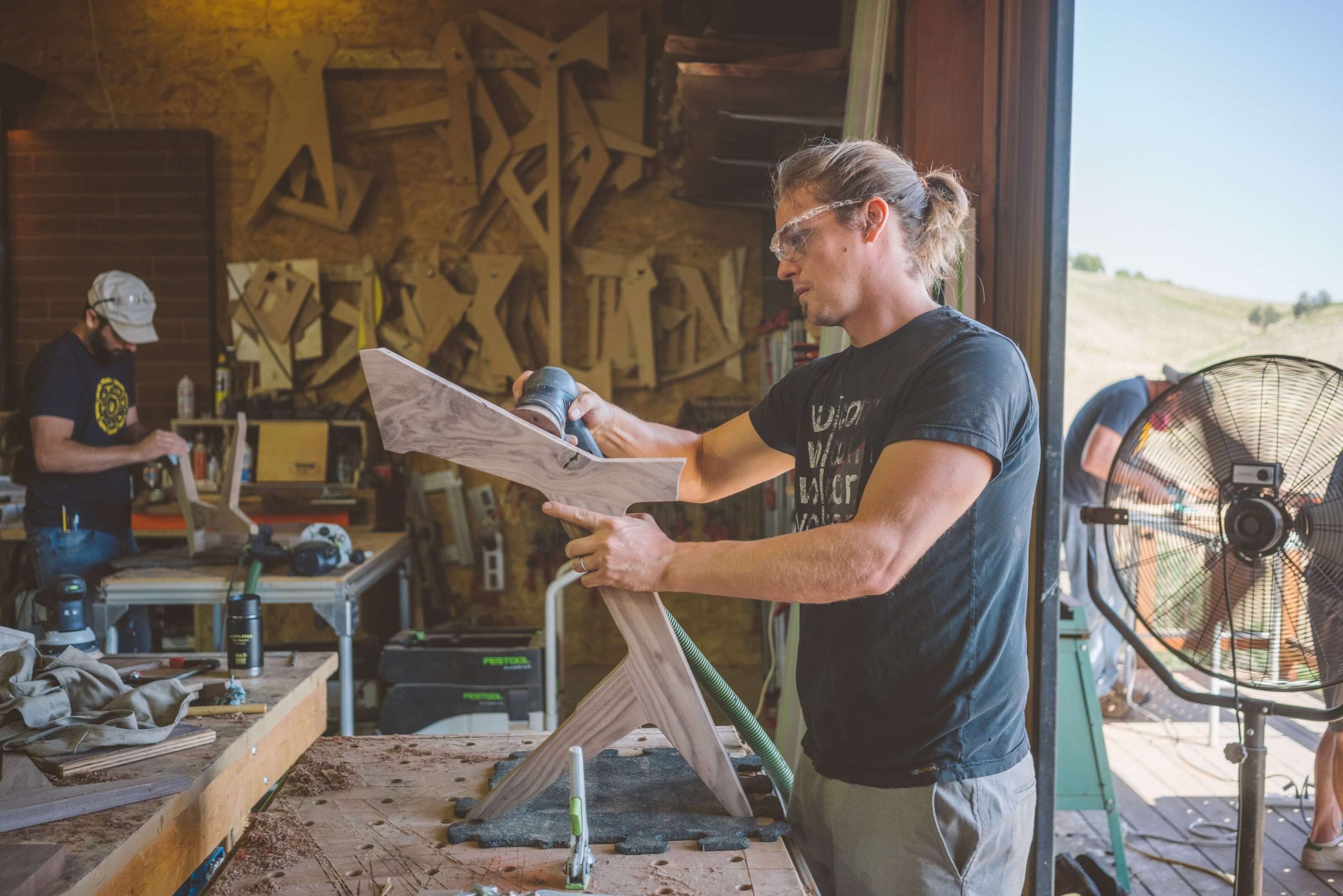
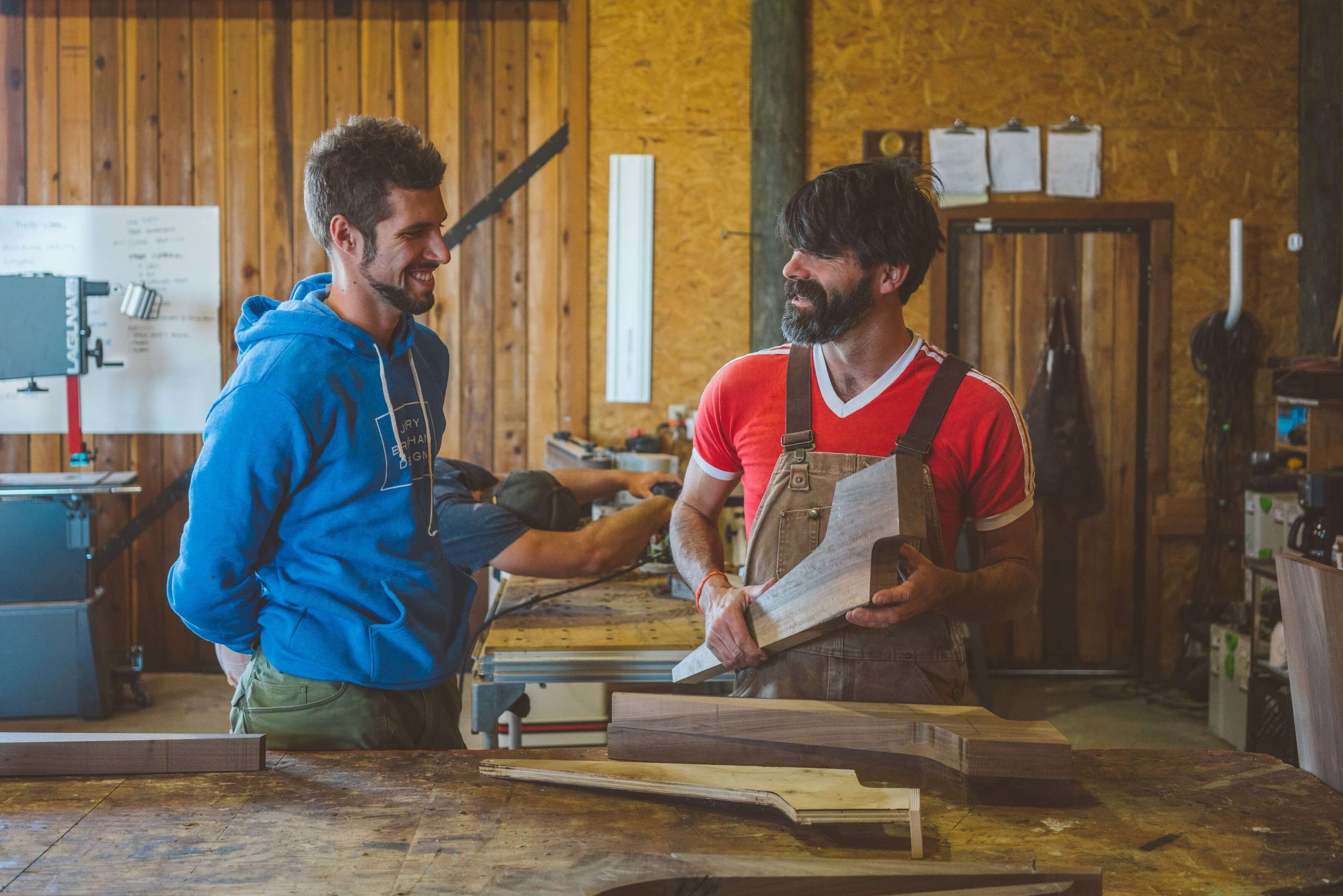
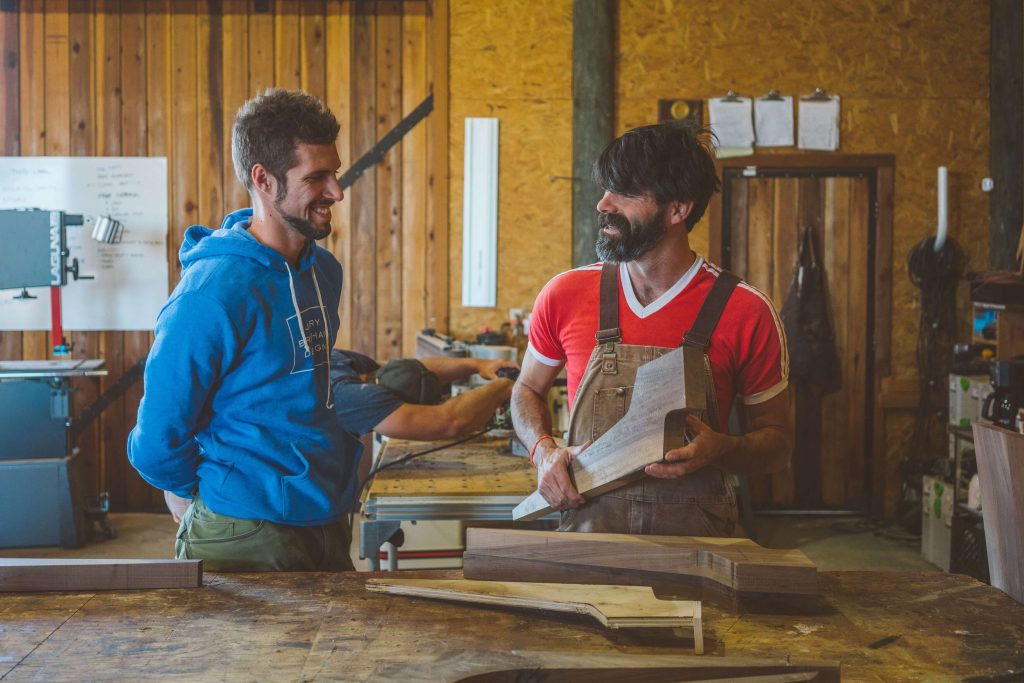
Small woodworking workshops like ours cap at eight participants per session, with three instructors present including me. That means roughly one instructor for every two to three participants. In practice, that ratio creates space for the kind of feedback that sticks. We can catch a technique issue before it becomes a habit. We can answer questions in the context of the actual work, not in general terms.

That’s not something a larger program can replicate, regardless of how good the curriculum is. Size is the variable that makes personalized instruction possible, and we take it seriously. See how our courses are structured at the What You’ll Learn page.

Who Is the Jory Brigham Workshop Actually Built For?

Honestly, primarily intermediate woodworkers. People who have built something — a table, a shelf, a box with real joinery — and want to know what comes next. Most participants arrive with a working knowledge of basic tools and an honest curiosity about the techniques they haven’t tried yet.

We do offer a couple of courses, the stool and end table, that are accessible to people with less experience. But the Hank Chair, the Cousin Eddie Bench, the Emerson sofa, and the Hollister credenza all require real prior knowledge. These aren’t beginner-friendly entry points. They’re designed to challenge someone who already knows their way around a shop.

If you’re not sure which course fits your level, reach out through the contact page and we’ll help you figure it out before you book.

What Will You Build and What Skills Will You Leave With?

Every course is built around one specific piece of furniture. That’s the model I believe in: pick one project, go deep on everything it requires, and finish it completely before you leave. Here’s what different courses typically involve:

  • The black walnut stool and end table: foundational joinery, finishing, and project management for newer participants
  • The Hank Chair: template routing, Festool Domino joinery, Kutzall carving of the backrest, upholstery selection
  • The Cousin Eddie Bench: joinery, upholstery, surface work
  • The Emerson sofa: a multi-day build covering upholstered seating construction in detail
  • The Hollister credenza: a four-day intensive (Thursday through Sunday) that’s the most comprehensive build in the catalog

All other courses run Friday through Sunday. Every course price includes instruction, all materials, and most meals. Full pricing and dates are available on the course details page.

What Does a Weekend Here Actually Look Like?

Friday: the shop opens at 8am with coffee and pastries. Instruction runs 8:30am to 5:30pm. In the evening, we have a barbecue on the property. It’s become a tradition — a chance to relax, talk about the work, and meet everyone properly before Saturday ramps things up.

Saturday is a full instruction day, same hours, with dinner provided. Sunday wraps up around 2pm when the build is complete. By that point, most participants have something in their hands they built themselves, finished themselves, and are proud of.

If you’re shipping your piece home rather than loading it in the car, we build the crate ourselves and coordinate the freight. The crate is $150 and shipping runs $125 to $250 depending on size and destination.

Why Is Paso Robles Worth the Drive From Southern California?

Paso Robles is in San Luis Obispo County, roughly 200 miles north of Los Angeles. The drive is straightforward — Highway 101 most of the way. Most participants from Southern California leave Friday morning and arrive with time to spare before instruction starts.

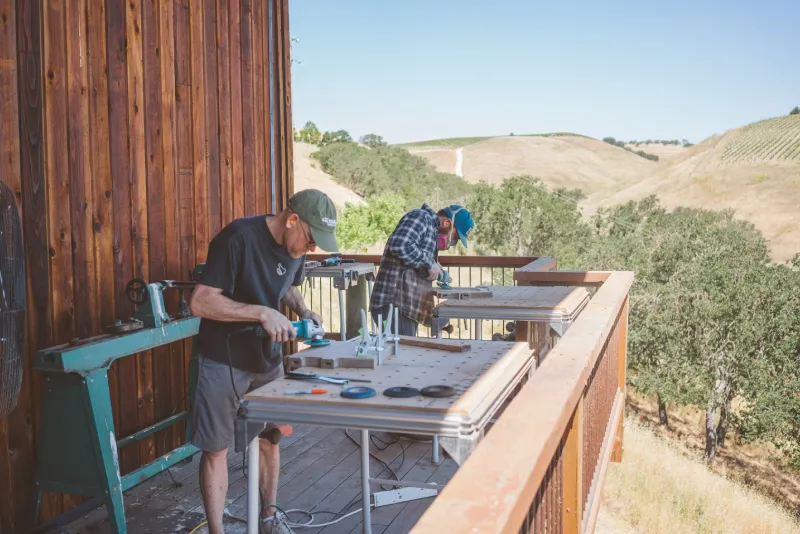
The setting is a genuine bonus. We’re in the hills above wine country, with vineyard views and enough quiet to focus on what you came to do. On-property lodging fills fast, but nearby Airbnbs start around $100 a night and there are several hotels within easy distance. Past participants have said the environment — the shop, the dinners, the conversations — makes the weekend feel like something between a class and a retreat.

For woodworking classes Southern California searchers who want real instruction on real furniture, the drive is a reasonable trade. Learn more about us at the homepage and check the blog for more from the workshop.

Ready to Book Your Spot at Jory Brigham Design Workshop?

If any of this sounds like what you’ve been looking for, check the current schedule and register before your preferred date fills. Several 2026 sessions are already at capacity.

FAQs

  1. Are your woodworking classes accessible from Southern California?
    Yes. Paso Robles is roughly 2.5 to 3 hours north of Los Angeles by car, making it a practical destination for a long weekend.
  1. How small are your workshop classes?
    Most courses cap at eight participants with three instructors. The Hollister and Emerson sessions are limited to six participants.
  1. Do I need to bring my own tools or materials?
    No. All tools and materials are provided and included in the course fee. Come ready to work.
  1. Which courses are best for intermediate woodworkers?
    The Hank Chair, Cousin Eddie Bench, Emerson sofa, and Hollister credenza are all designed for intermediate to advanced participants.
  1. Can I ship my finished piece if I’m driving from Southern California and can’t fit it in the car?
    Yes. We build the crate in-house ($150) and coordinate UPS shipping. Freight is typically $125 to $250 depending on the piece.
Are Modern Woodworking Classes Actually Teaching You to Build, or Watch?

box img2

The woodworking content landscape has never been bigger. YouTube channels with millions of subscribers, detailed Instagram builds, step-by-step podcast tutorials — if you want to watch someone make furniture, the options are endless. But watching and doing are two fundamentally different things. Modern woodworking classes that are worth your time have one thing in common: they get you building, not just observing. If you’re based in or around Palo Alto or anywhere in California’s Bay Area and you’ve been watching instead of making, it might be time to change that.

What Separates Modern Woodworking Education From the Traditional Approach?

Traditional woodworking apprenticeships are rare. The model of spending years under a master craftsman before touching a real project has largely given way to a faster, more accessible form of education. Modern woodworking classes reflect this shift — they compress meaningful skill development into shorter, more intensive formats, often organized around specific builds rather than general skill sequences.

This isn’t a compromise. It’s a more honest approach to how adults actually learn. According to research published by the Association for Experiential Education, project-based and immersive formats consistently outperform lecture-based instruction for complex manual skills. When you have a specific outcome — a chair, a bench, a sofa — every technique you learn is immediately contextualized. You’re not learning clamping in the abstract; you’re learning how to clamp this joint on this piece before it goes into a finished build.

The tools have also changed. The Festool Domino, laser-cut templates, precision powder-coating rigs — these are tools that didn’t exist in the traditional apprenticeship model. A good modern class teaches you to use them confidently.

Is Woodworking in Palo Alto and the Bay Area Actually Accessible?

The Bay Area has a passionate craft and maker community — Wikipedia’s overview of Palo Alto notes its longstanding culture of innovation and hands-on problem-solving, which aligns naturally with serious craft education. There are maker spaces and community workshops scattered across the region, but structured, instructor-led furniture building at an intermediate or advanced level is harder to find locally.

The most practical option for Bay Area woodworkers looking for serious instruction is typically a short drive or weekend trip south. Jory Brigham Design Workshop in Paso Robles is roughly three hours from Palo Alto — manageable for a Friday-to-Sunday commitment. Multiple participants from the Bay Area, including Tarjei Vassbotn from Palo Alto, have attended and noted the experience as one of the best decisions in their woodworking journey

Woodworking in Palo Alto itself is most often a solo or maker-space activity. The workshop model — where you travel to a dedicated space, work with professional-grade equipment, and receive direct instruction — fills a gap that local resources don’t typically cover at this level of depth.

What Kind of Projects Do Serious Modern Classes Cover?

At Jory Brigham Design Workshop, the project list is specific and deliberate. A black walnut stool or end table for those building foundational confidence. A TIG welding bench that brings in metalworking alongside wood. The Hank Chair, which requires intermediate skill and covers router templates, Festool Domino joinery, and Kutzall carving of the backrest. The Cousin Eddie Bench with upholstery selection. The Emerson sofa. The Hollister credenza — a four-day project that’s one of the most comprehensive builds in any short-format program in California.

Each project is a finished piece of furniture. Not a practice joint, not a sample panel. A piece designed by Jory that you build, finish, and take home. The complete course curriculum is outlined here.

How Does Design Thinking Factor Into Contemporary Furniture Building?

One of the things that sets genuinely modern woodworking instruction apart is the emphasis on design intent — understanding not just how to build a piece, but why it looks the way it does. Jory Brigham’s background as a designer, not just a builder, shapes how the instruction is framed.

The idea isn’t to produce participants who can replicate Jory’s pieces. The goal, as stated explicitly in the workshop philosophy, is to send you home with your own ideas and the confidence to execute them. Template creation is part of that — understanding how to translate a design concept into a buildable template teaches you to think through furniture from a design standpoint, not just a construction one.

This design-forward orientation is consistent with where modern woodworking as a discipline is heading. According to the American Institute of Architects, the integration of design thinking with craft production is increasingly valued in both commercial and residential furniture contexts.

Jory Brigham Design Workshop operates at the intersection of serious instruction and a genuinely enjoyable experience. The workshop is based in Paso Robles — a setting that includes vineyard views, good food, and a community of people who share your interest. Courses run Friday through Sunday (the Hollister course runs Thursday through Sunday), with lodging available on-site and nearby.

Class sizes stay small: maximum eight participants for most courses, six for the Hollister and Emerson. Three instructors are present throughout. That ratio ensures you’re getting real feedback on what you’re actually doing, not just watching from a distance.

If you’ve been looking for modern woodworking classes that don’t talk down to you and actually trust you to build something challenging, take a look at the full course list and get in touch before the next date fills up.

FAQs

  1. What does a modern woodworking class include that traditional instruction doesn’t?
    Modern classes use current professional tools like the Festool Domino, precision templates, and contemporary finishing systems. They’re also structured around completed builds rather than extended apprenticeship sequences, making skill development faster and more practical for working adults.
  1. How far is Jory Brigham Design Workshop from Palo Alto?
    Roughly three hours by car, south along Highway 101 to Paso Robles. Most participants from the Bay Area make it a long weekend trip, combining the workshop with lodging in the area.
  2. Do I need to bring my own tools or materials?
    No. All tools, materials, and most meals are included in the course price. You arrive ready to work and leave with a finished piece.
  1. Are the classes suitable for someone who’s never built furniture before?
    A couple of the courses, like the stool and end table, are accessible for those with limited experience. Most of the catalog, however, is aimed at intermediate woodworkers who are looking to advance existing skills rather than start from scratch.
  1. How do I know which course is right for my skill level?
    The course details page notes skill requirements for each build. You can also reach the team directly via the contact page for a more specific recommendation.

What Does a Real Woodworkers Workshop in California Actually Look Like?

gallery img5 scaled

Most people who’ve been woodworking for a while have a pretty clear sense of what they don’t want in a class. They don’t want to sit through a lecture. They don’t want to share tools with 20 other people. They don’t want a certificate at the end of a weekend that doesn’t reflect anything they actually learned. What they want is simple: a real workshop, real instruction, and something tangible to take home. That’s exactly what a properly structured woodworkers workshop in California delivers — and the difference between that and a hobbyist event is significant.

What Makes a Woodworkers Workshop Worth Attending?

A good workshop doesn’t just transfer knowledge — it changes how you approach your own builds going forward. The benchmark isn’t whether you had a good time (though that matters). It’s whether you left with something you couldn’t do before. Practically speaking, that means the instruction needs to be specific, the builds need to be real, and the environment needs to be small enough for genuine feedback.

According to the Wood Products Council, interest in hands-on woodworking education has increased considerably over the past several years, driven by a broader cultural shift toward making and craft. That demand has created a wide range of programs, but quality varies substantially. The workshops that consistently produce real skill development tend to share a few traits: low student-to-instructor ratios, project-based curriculum, and instructors who are active practitioners rather than full-time teachers.

Who Is the Typical Participant, and Are You the Right Fit?

This is worth being honest about. Most serious woodworking workshops aren’t designed for complete beginners. They’re designed for people who already have some experience and want to push it further. The typical participant at Jory Brigham Design Workshop has been woodworking for at least a year or two, understands how to safely operate basic power tools, and has some familiarity with joinery concepts. They’re not experts, but they’re not starting from zero either.

A few courses at Jory Brigham — the stool and end table, for instance — are more accessible to people with minimal experience. But the majority of the curriculum, including the Hank Chair and the Cousin Eddie Bench, explicitly requires intermediate-level skill. If you’re at that stage — curious, experienced enough to know what you don’t know, and looking for structured advancement — this is well suited to where you are.

What Are You Actually Building, and How Hard Is It?

The course catalog at Jory Brigham Design Workshop is worth reviewing in detail. The builds range from a black walnut stool and end table (a solid starting point) to the Hollister credenza, which is a four-day course and one of the more ambitious weekend builds available anywhere in California.

The Emerson sofa is another notable one — a multi-day build that covers upholstered seating construction at a level of detail most woodworkers never encounter. These are furniture pieces in the truest sense: designed, built, finished, and shipped home. They’re not samples or practice joints. They’re the real thing.

What Tools and Techniques Will You Walk Away With?

A wood workers workshop worth attending teaches technique in a way that transfers. The Festool Domino, for example, is a joinery tool that a lot of intermediate woodworkers have heard of but never used. The sessions at Jory Brigham give participants hands-on time with it in the context of a real build — not a demonstration, but actual use under guidance. Learn more about what’s covered in each course here.

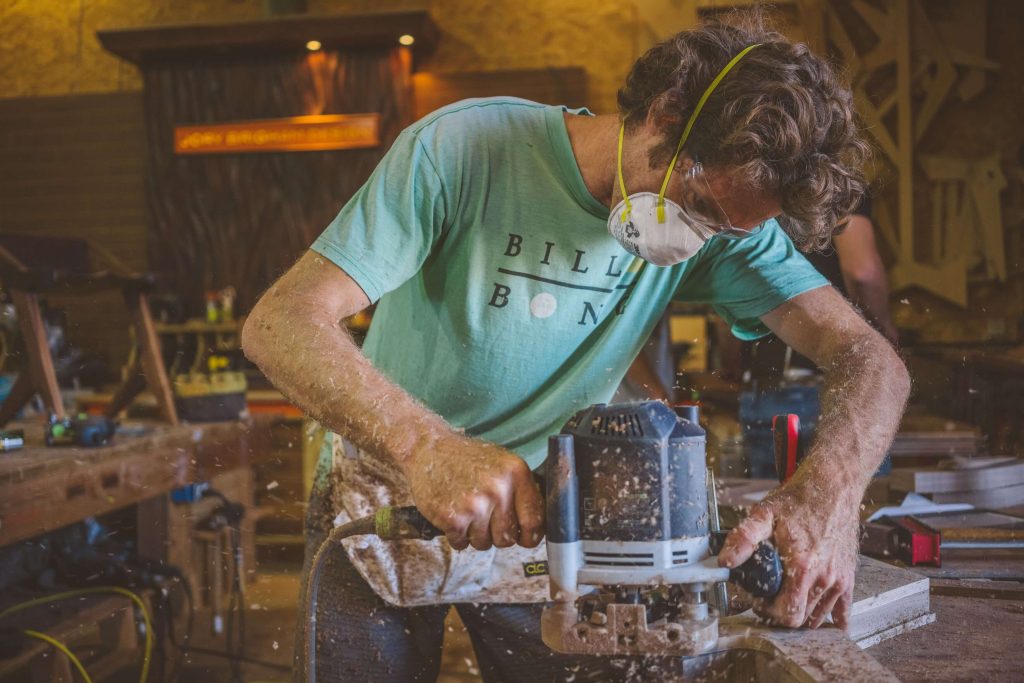
Template and router work is another skill that comes up across multiple courses. Templates are one of those techniques that feel like a small thing until you use them — at which point they change how you design everything. Clamping and glue-up sequencing, finishing, and in the TIG welding bench course, metalworking with an expert Cleveland welder are all part of the curriculum depending on which session you choose.

The workshop also uses tools from brand partners including Festool, SawStop, Bessey, and Woodcraft — all equipment you’d want to know how to use in a serious shop setting.

Where Does Jory Brigham Design Workshop Fit Into All of This?

Jory Brigham isn’t a full-time teacher who also makes furniture on the side. He’s a designer and builder — his work is owned by clients from New York to New Zealand — who also teaches because he believes in how it opens doors for other craftspeople. That distinction matters. The instruction comes from someone actively engaged in the same work, not removed from it.

The workshop islocated in Paso Robles, California, in the hills overlooking the Central Coast. It’s a setting that works on multiple levels: the physical environment is beautiful, lodging is available on the property and nearby, and the Friday barbecue has become part of the tradition. Classes are capped at eight participants (six for some courses) with three instructors, making it one of the better-staffed small workshops in the state.

If you’re thinking about booking, check the course scheduleand contact the teamearly — several dates sell out well before the session runs.

Frequently Asked Questions

  1. Who is the Jory Brigham woodworkers workshop designed for?
    Primarily intermediate woodworkers who have some hands-on experience and want to build their skills further. A few courses are accessible to beginners, but most require prior knowledge of basic tools and joinery.
  1. What is included in the workshop price?
    All instruction, materials, and most meals across the weekend. Lodging is separate, though the workshop can help connect you with nearby options, including on-property accommodation when available.
  1. How small are the classes?
    Most courses are capped at eight participants with three instructors, including Jory Brigham. The Hollister and Emerson courses run with a maximum of six participants.
  1. Can my finished piece be shipped to me?
    Yes. The workshop builds a crate and coordinates UPS shipping after the course. The crate costs $150, and shipping is calculated based on size and destination.
  1. Do the courses run every weekend?
    No. Sessions are scheduled on specific dates throughout the year — typically spring through fall. Check the course details page for current availability.

Where Can I Find the Best Wood Finishing Classes in California Today?

Custom Furniture Workshops in California

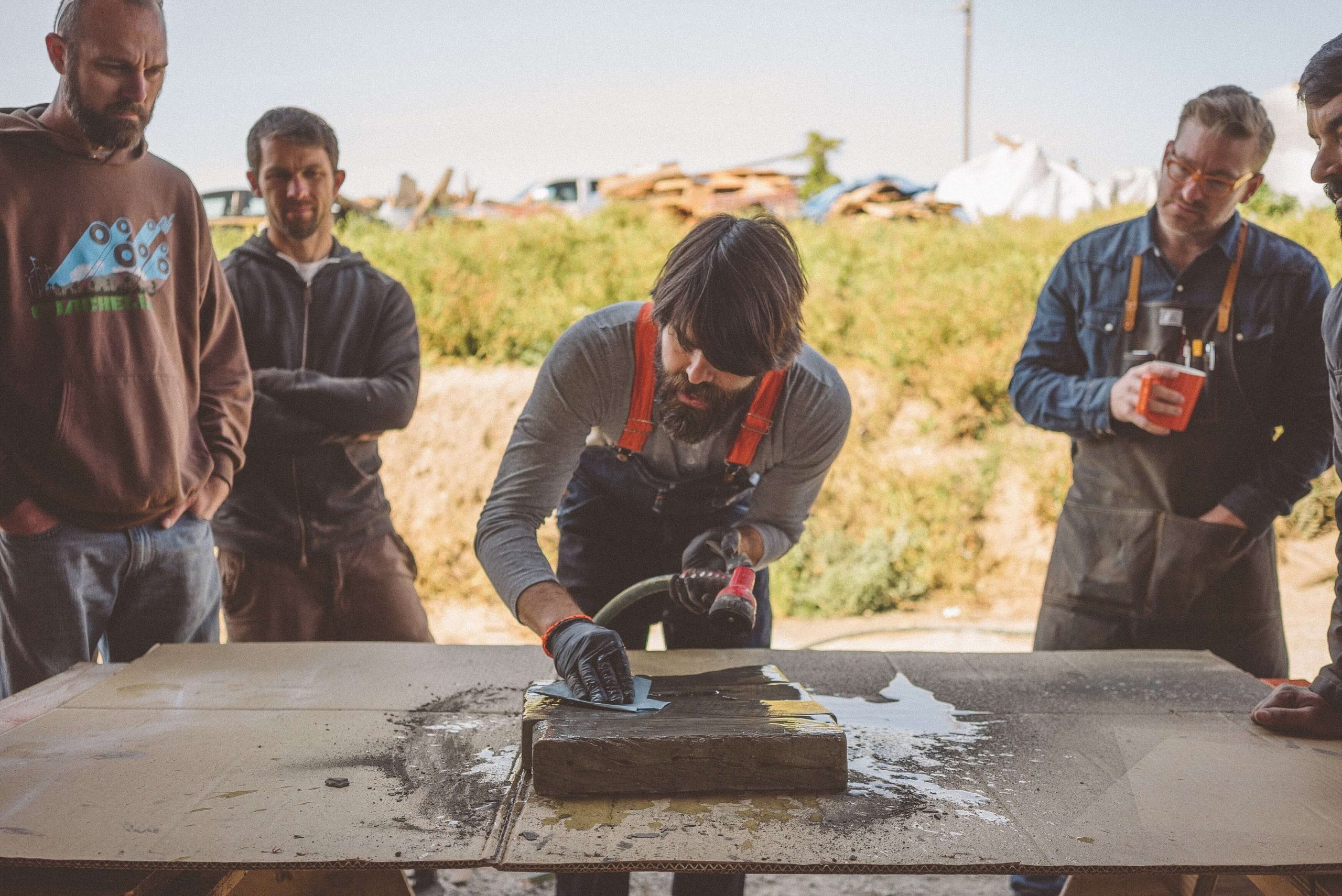
The final look of a piece of furniture depends entirely on the quality of the finish. You can have the best joinery in the world, but a poor finish will hide the beauty of the timber. This is why wood finishing classes in California are becoming a staple for intermediate woodworkers. We believe that the finish should celebrate the wood rather than cover it up. Our approach is about highlighting the natural character of the grain. It is about creating a surface that invites a human touch and stands the test of time.

Why is grain narrative more important than wood stain?

Many beginners use heavy stains to change the color of the wood. We move away from this approach. We focus on the grain narrative. This means selecting pieces of wood that tell a story when they are joined together. A good finish should be invisible in its feel but deep in its luster. We use hand rubbed oils that soak into the fibers. This technique ensures that the wood stays the star of the show. We no longer teach concrete or mixed media skills because we want to focus purely on the mastery of the timber itself.

What professional finishes do we use in our shop?

Our finishing process is a mixture of modern efficiency and traditional patience. We avoid thick plastic coatings that feel like a barrier between the user and the wood. Instead, we focus on:

  • Deep penetrating oils that harden within the wood fibers.
  • Hand sanding techniques that move through specific grit progressions.
  • Buffing methods that create a soft and silky tactile experience.
  • Protecting the wood against moisture while allowing it to breathe.
  • Repairable finishes that can be easily maintained for generations.

How do industrial tools impact your final result?

You cannot get a professional finish on a poorly prepared surface. This is why woodworking classes in Southern California are so helpful. You get access to industrial wide belt sanders and high end planers that prepare the wood perfectly. When you start with a surface that is truly flat and smooth, the finish applies much more evenly. Our students spend a significant amount of time on surface preparation. We utilize professional grade gear to take the guesswork out of the process. This ensures that the final result looks like it belongs in a high end gallery.

Why is Southern California the perfect place for makers?

The region has a long history of design and craftsmanship. Southern California is home to some of the most innovative furniture designers in the country. While you are here for a workshop, you can explore the Santa Barbara area or enjoy the coast. The local climate is also ideal for woodworking as the low humidity helps the wood stay stable during the building process. It is an inspiring environment that encourages creativity and artistic risk taking.

What is the true lineage behind the Jory Brigham shop?

Jory Brigham did not learn his trade from a video or a textbook. He is a third generation maker who grew up with sawdust in his hair. This family lineage is the secret to our success. We offer a perspective on design that is rooted in decades of hands on experience. We want to pass this knowledge on to the next generation of intermediate makers. Our workshops are designed to be conversational and factual. We want you to feel like part of the family while you are here at the bench.

Most of our courses are held from Friday morning through Sunday afternoon. This allows for a full weekend of work and community. The only exception to this schedule is the Hollister course which follows its own timeframe. You can see all the details on our about us page.

Take A Fresh Start to Your Hobby

The way you finish a piece of furniture says everything about your respect for the material. At Jory Brigham Design Workshop, we help you master the techniques that turn a good project into a great one. We trade the utility of the garage for the artistry of the studio. Whether you are coming for the skills or the California coast, you will leave with a new sense of pride in your work. Let us finish something beautiful together.

Frequently Asked Questions

  1. Do I need prior experience with finishes?
    A basic understanding of wood is helpful. Our classes are geared toward intermediate makers who want to move away from hardware store sprays and into professional oil finishes.
  1. Will I be using power sanders?
    Yes. We use a variety of professional power tools as well as hand sanding techniques to achieve the perfect surface.
  1. Are these classes for cabinetry makers?
    While the skills are transferable, we focus on fine furniture. Our finishes are designed for sculptural pieces like tables and chairs rather than kitchen cabinets.
  1. Where can I find more about your history?
    Please visit our about us page to learn more about the Brigham family lineage.
  1. How do I contact the shop?
    You can reach us through the contact page or find more info on the home page.

Furniture Making Classes: How to Master Building Classes in CA?

gallery img4 scaled

Many woodworkers spend weeks on joinery only to rush the final stage. The finish is not just a protective layer. It is the handshake of the piece. It is the first thing someone feels when they run their hand across a tabletop. Finding high quality wood finishing classes in California is about more than learning to apply oil. It is about understanding the chemistry of the timber and the psychology of touch. For the intermediate maker, mastering the surface is the final step in moving away from DIY projects and into the world of professional artistry.

Why does the tactile experience define high end furniture?

When you look at a piece of furniture in a gallery, you are drawn to touch it. This is not an accident. It is the result of a deliberate finishing process. In our shop, we believe that the wood should still feel like wood. We have moved away from teaching concrete skills to focus on the organic warmth of timber. We teach you how to create a surface that feels silky rather than plastic. This tactile quality is what separates a sculptural piece from a mass produced item. It is about honoring the life of the tree through a sensitive final touch.

Is there a hidden science behind grain pop and luster?

Every species of wood reacts differently to light. Black Walnut has a deep chocolate swirl that requires a specific sanding progression to truly shine. White Oak has a cellular structure that can look dull if not treated with the right oils. We show you how to read the wood fibers to ensure the grain narrative is clear. This involves understanding how light refracts off the surface. By the time you finish our session, you will know how to make the wood pop without using artificial dyes or heavy pigments that mask the natural beauty.

How do you choose between film finishes and natural oils?

There is a time and place for every finish, but we prefer the honesty of natural oils. Many woodworking classes in Southern California focus on spray booths and lacquer. We take a different path. We focus on hand applied oils that become part of the wood. This creates a finish that is easy to maintain and ages gracefully. It allows the user to stay connected to the material. We discuss the durability of these finishes and why they are the preferred choice for legacy furniture that is meant to be used every day.

Why is Southern California the perfect place for makers?

The light in this region is world famous for a reason. It is the perfect place to judge the clarity of a finish. When you are not at the bench, you can gain inspiration from the Getty Center or the coastal architecture. The local design scene is a blend of mid-century modern and contemporary craft. This environment pushes you to think bigger. The low humidity here also ensures that your oil finishes cure properly and evenly, which is a major advantage for any maker looking for a perfect result.

How do professional tools eliminate finishing frustrations?

Most finishing failures happen during the sanding phase. We provide access to industrial wide belt sanders and specialized dust extraction systems. These tools ensure that your surface is perfectly flat and free of swirl marks before the first drop of oil touches the wood. Utilizing high end gear takes the physical exhaustion out of the process, allowing you to focus on the artistic details. Our shop is a space where the intermediate builder can experiment with gear that is usually only found in professional production houses.

Most of our workshops run from Friday morning to Sunday afternoon. This immersion allows you to see the oil dry and apply secondary coats under expert supervision. Please remember that this schedule is the standard for all sessions except for the Hollister course. You can read more about our history on our about us page.

The Final Handshake

A finished piece of furniture is a conversation between the maker and the user. At Jory Brigham Design Workshop, we help you make sure that conversation is a positive one. We trade the sterile feel of factory finishes for the warmth of hand rubbed artistry.

Whether you are here for the technical mastery or the California sun, you will leave with a new appreciation for the art of the surface. Your masterpiece deserves a finish that is as thoughtful as its construction.

Frequently Asked Questions

  1. Will I learn about spray finishes?
    No. We focus on hand applied oils and waxes. We believe these provide a more intimate and repairable surface for fine furniture.
  1. Is sanding really that important?
    Sanding is 90 percent of a good finish. We show you the professional progression to get a mirror smooth surface without the fatigue.
  1. Can I bring my own project to finish?
    Our workshops are project based. You will be finishing the piece you build during the session to ensure you learn the entire process from start to finish.
  1. Why don’t you use concrete anymore?
    We have shifted our focus to the purity of wood. We believe that mastering timber offers a more timeless result for our intermediate students.
  1. Where can I sign up?
    Check our course details page for the latest availability and location info.
  • chat
  • Lets make something amazing together