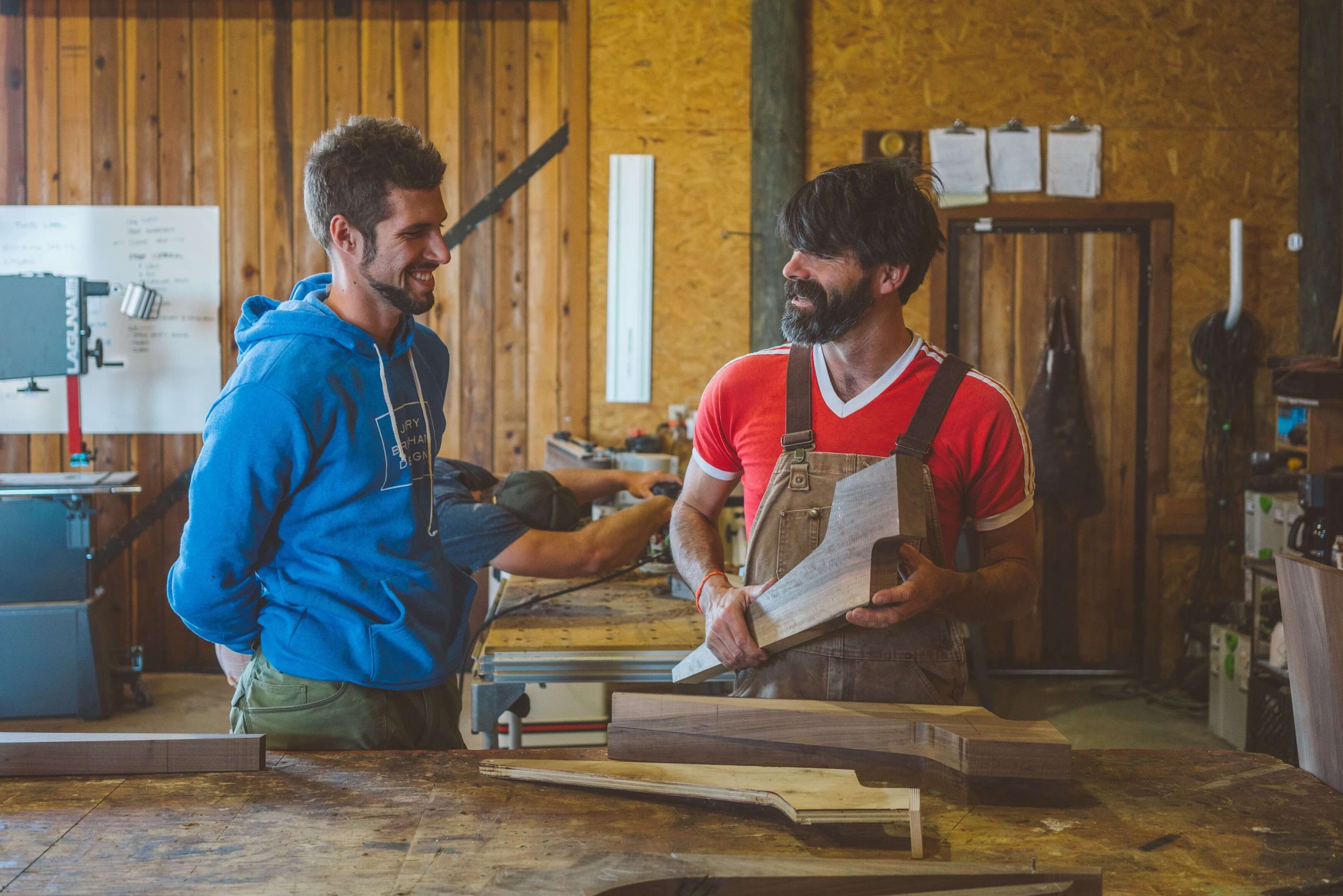
Signing up for a woodworking workshop in California sounds simple until you start wondering what the weekend actually involves hour by hour. This guide walks through the full structure of our hands-on course, what our custom furniture workshops California programs typically cover, and what students can expect from arrival to departure.
We open most courses Friday morning with introductions, a shop safety overview, and a walkthrough of the specific project or design direction for the weekend. This first block sets expectations for the pace and structure of the following two and a half days, and it gives our students a chance to ask questions before tools come out.
Setting this initial baseline allows us to transition smoothly from basic orientation into high-level sculptural design. Except for our specialized Hollister session, which follows a separate schedule, every class utilizes this opening session to align intermediate woodworkers with our core shop flow. We grab fresh coffee, review grain selection strategies, and examine how industrial machinery like Laguna bandsaws and Festool systems accelerate your build. By establishing a shared vision early, we ensure you spend maximum time at the bench shaping raw timber, developing your signature style, and building artistic confidence.
We spend real time on design before construction begins in our custom furniture workshops in California. For the same reason, we discuss proportion, joinery choices, and how the piece will actually function in a home. Rather than handing students a fixed template, we focus this stage on helping each student make informed decisions about their specific piece, within the constraints of what is achievable in a weekend.
We dedicate the bulk of Saturday, and often part of Friday afternoon, to joinery and assembly, the technical core of the build. This is where our hands-on instruction matters most, since real-time correction during joinery work prevents small mistakes from becoming structural issues later in the piece. We guide students through cutting, fitting, and assembling their project directly throughout this phase.
We schedule finishing toward the end of the weekend, once assembly is complete, since applying a finish to unfinished joinery risks trapping glue residue or dust beneath the surface. We walk students through how different finishes interact with the specific wood species used in their project at this stage, not simply apply a final coat without explanation.
We use the half-day Sunday to cover final finishing touches, any last assembly details, and preparing the piece for either transport or shipping. We ship finished pieces white glove rather than building a crate, so students traveling by air can leave with peace of mind that their piece will arrive safely without needing to manage freight logistics themselves. We also make time for final questions and discuss how students can continue developing their skills once back in their own shop, since we build the weekend to lay a foundation rather than end the learning process entirely.
We believe a woodworking workshop in California should run the right way. This in turn moves students through design, construction, and finishing as one connected process rather than isolated lessons. It then gives them both a finished piece and a real understanding of how it came together. We structure our Friday through half-day Sunday courses in Paso Robles around exactly this kind of full-process instruction, and we now offer on-property lodging for students who want to stay close to the shop for the full weekend. Anyone curious about what a specific course involves can review our course details page or reach out through our contact page with questions.
For a closer look at the specific skills we cover across different courses, our what you’ll learn page breaks down the curriculum in more detail.
Those wanting a visual sense of past student projects can also browse our gallery for examples of completed custom furniture pieces.