If you already know your way around a table saw and are comfortable with fundamental joinery, our workshops are designed for you. We focus on bridging the gap between hobbyist and professional by teaching advanced techniques and design philosophy, not basic safety. Our courses, which require intermediate skill levels, focus on complex projects like the Hank Chair, Bozley bar stool, end table or Cousin Eddie Bench, integrating template routing, specialized carving, and seamless glue-up methods. We ensure your skill acquisition is fast and effective through extremely small classes (maximum 8 people) and intensive, project-based learning over 2.5 days. This approach allows you to refine your basic knowledge into signature craftsmanship.
Why the Intermediate Jump is the Hardest
You’ve likely invested in some tools, built a few simple projects, and now you realize that moving from a straight-line cabinet to a flowing, curved chair requires a completely different skill set. This is the hardest jump because it requires moving from process (how to cut safely) to precision and design (how to cut perfectly for a seamless result).
We realize that getting an idea out of your head and turning it into a tangible, usable piece of furniture that looks great is difficult without the proper skills, tools and confidence. These courses are designed to give you the confidence to return to your own shop or garage and apply your new knowledge to one of your own designs. You’ll know what tools you need to add to your collection, and the skills you need to practice in order to get to where you want to be as a woodworker.
Our workshops are tailored for the student who has a basic understanding and is eager to push the boundaries of their craft. When you enroll in our more advanced projects, you are engaging in intermediate furniture workshops designed to challenge your existing knowledge. For example, building the Hank Chair, or Bozley Stool involves complex, compound joinery and template work that demand focus and refined technique. We give you the high-level secrets to achieve professional consistency on projects you wouldn't dare tackle alone.
The Jory Brigham Project Philosophy
We believe the best way to learn is by doing, but by doing something challenging and worth keeping. Our philosophy is simple: master a complex, professionally designed piece, and you master the essential, transferable skills within it. Jory will go over design, and how he starts every piece, but we feel that design is personal. Its how you get it out of your head, and into what you envisioned that is most important.
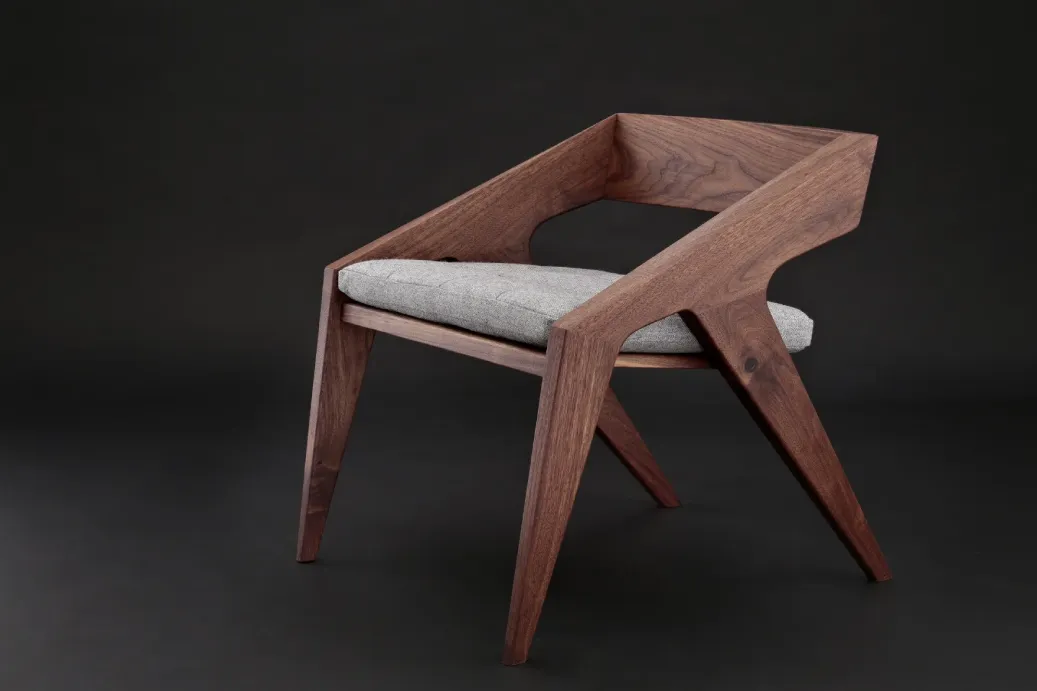
The Hank Chair: This project demands template routing, routing using templates and jigs and specialized Kutzall carving to hand-sculpt the backrest. It’s a masterclass in organic shaping and ergonomic design. The Hank Chair glue-up is one of the most difficult glue-up of all the courses. We will teach you how to utilize cauls, and other clamping techniques that will make a complicated glue-up approachable and less intimidating.
The Cousin Eddie Bench: This involves intricate structural assembly and sophisticated joinery for a large piece, forcing you to think about material movement and long-term durability. We utilize jigs that teach you how to take the guess work out of furniture making. When it comes to glue-up, you’ll know how to make to identical pieces that will join without the expected typical chaos during the glue-up.
The Emerson Sofa: This course maxes out at 6 people. Its the largest piece we do a course on. The fabric choices are crucial when making this piece personal to your space. We go over how to make a piece like this with structural integrity, and strength. Many of the same techniques we teach in the Hank course applies to this course.
The Bozley stool: We offer this course in either the bar height stool or chair height. This is one of the most technical of all the courses. How the sizes meet up with the backrest and seat are crucial. We teach the importance of making all joining pieces consistent and perfect so glue up is seamless, and the outcome is Beautiful. Carving both the seat and backrest allows us to get away from the jigs and templates and allows us to dabble with the fluidity of hand carving. This really adds and extra element of soul to the piece.
The End Table: This was the OG of all the course, and what started them all. We wanted to come up with a piece that covered all our favorite, efficient and useful techniques. We teach the basics of using sleds on the table saw, template routing, material selection, and finishing. We even demonstrate coving on the table saw to create individualized drawer fronts.
Welding/Bench: This course gives us the opportunity to marry the softness of wood, with the more serious, and colder elements of metal, it allows us to play with color through powder coating and teach how metal can bring in that structural element that allows us more freedom when designing. Coming up with our own style is paramount, and when we can learn ways to add uniqueness to our designs by introducing different materials and techniques, we will have created our personal own “style”. This is one of the most gratifying and fulfilling steps of the woodworking journey.
We don't teach theory; we teach execution. You will leave with a piece of furniture that serves as a physical reference for your newfound capabilities.
Intermediate Woodworking Course: Beyond the Basics
If you are serious about refining your skills, committing to an intermediate woodworking course with us is a high-return investment. We focus heavily on the techniques Jory uses daily in his professional studio:
Router Templating: Learning to consistently duplicate parts with speed and precision, a non-negotiable skill for intricate furniture.
Festool Domino: Mastering this system to create bulletproof, invisible joinery efficiently, eliminating the guesswork of traditional mortise and tenon. The Domino allows you to make strong joints that would otherwise be impossible or too time consuming.
Finishing Science: Moving beyond basic polyurethanes to expert application of finishing oils that enhance the wood's natural grain and provide a durable, professional feel.
Because we limit our classes to just 6-8 people, you receive dedicated attention from our three instructors, guaranteeing your technique is perfect before you move on. We make sure that every cut you make is a lesson learned.
Mastering Signature Design and Tool Efficiency
For an intermediate woodworker, efficiency is key. It's not just about being able to do something, but being able to do it quickly and consistently. We teach you how to achieve this through process optimization and advanced tool use.
The skills we teach are directly aimed at improving your craft's quality and speed:
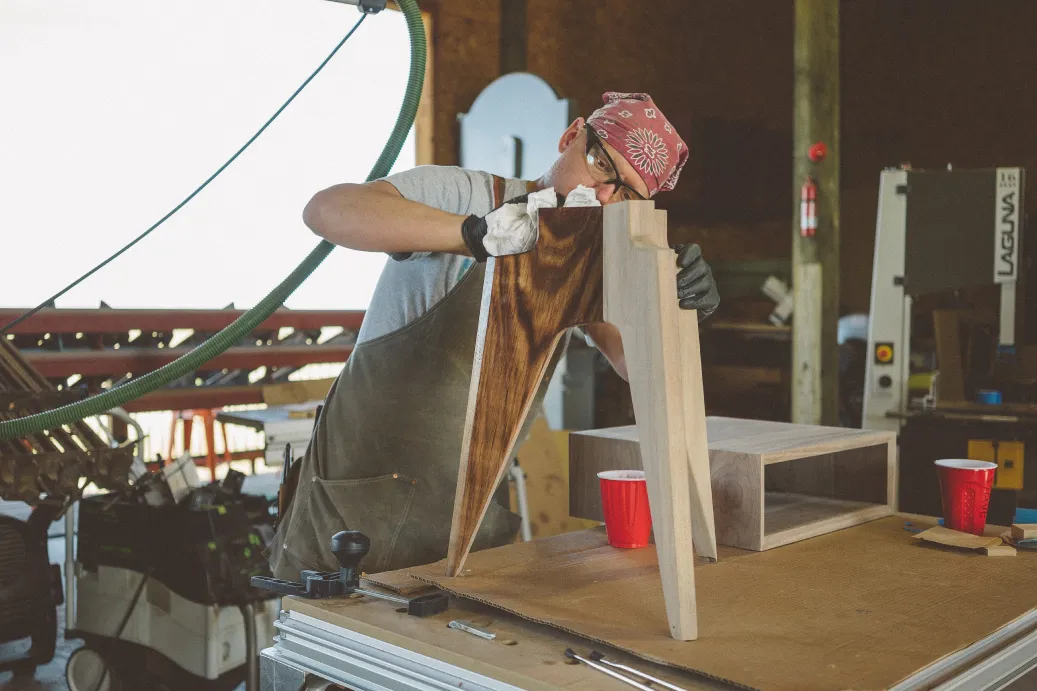
Precision Glue-Ups: We show you strategic clamping techniques that prevent shifting and gaps, leading to cleaner, stronger joints every single time.
Mixed Materials: We offer projects, like the TIG Bench, that introduce metalworking (TIG welding) alongside woodworking. This opens up entirely new design avenues and allows you to create contemporary furniture with balanced material fusion.
Eliminating Guesswork: Our step-by-step, hands-on instruction removes the frustration of self-teaching, allowing you to focus purely on mastering the technique.
Material Selection: You will work with premium Black Walnut and other woods, learning how to read the grain and select the best parts of the board for structural integrity and visual appeal.
The Jory Brigham Workshop: Where Craft Meets Confidence
Stop making projects you’ll hide in the garage. Invest a long weekend with us to transform your existing woodworking knowledge into the confidence and skill needed to build your first professional-grade heirloom.
People Also Ask
Q1: Are these workshops better for intermediate or beginner woodworkers?
Primarily intermediate. While we offer a couple of beginner-friendly options, the curriculum is designed to push students who already possess basic woodworking knowledge.
Q2: Do I need to bring my own tools to the workshop?
No, we provide all the necessary professional-grade tools, including the Festool Domino system, and premium materials like Black Walnut.
Q3: What is the average class size for intermediate projects?
Classes are capped at a maximum of 8 participants, ensuring a high level of personalized instruction (a 3:1 student-to-instructor ratio).
Q4: Can the skills learned here be applied to cabinet making?
Yes. The precision milling and strong joinery techniques you master are fundamental to both fine furniture and high-end cabinetry.
Q5: What type of furniture piece will I build in the intermediate course?
You will typically build a complex piece like the Hank Chair or Cousin Eddie Bench, focusing on advanced joinery, shaping, and finishing techniques.